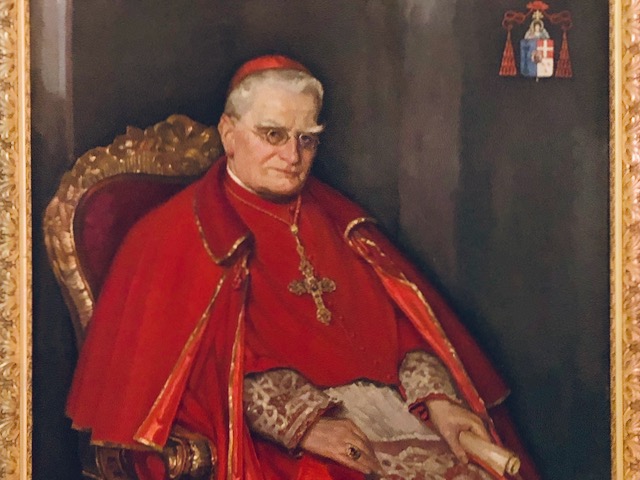
On October 18, the Church celebrates the 100th World Mission Day (WMD), established by Pius XI in 1926 to pray for missionaries and support the missions. On this centenary, the Congregation remembers Redemptorist Cardinal Willem van Rossum, Prefect of Propaganda Fide during the years the Day was established.
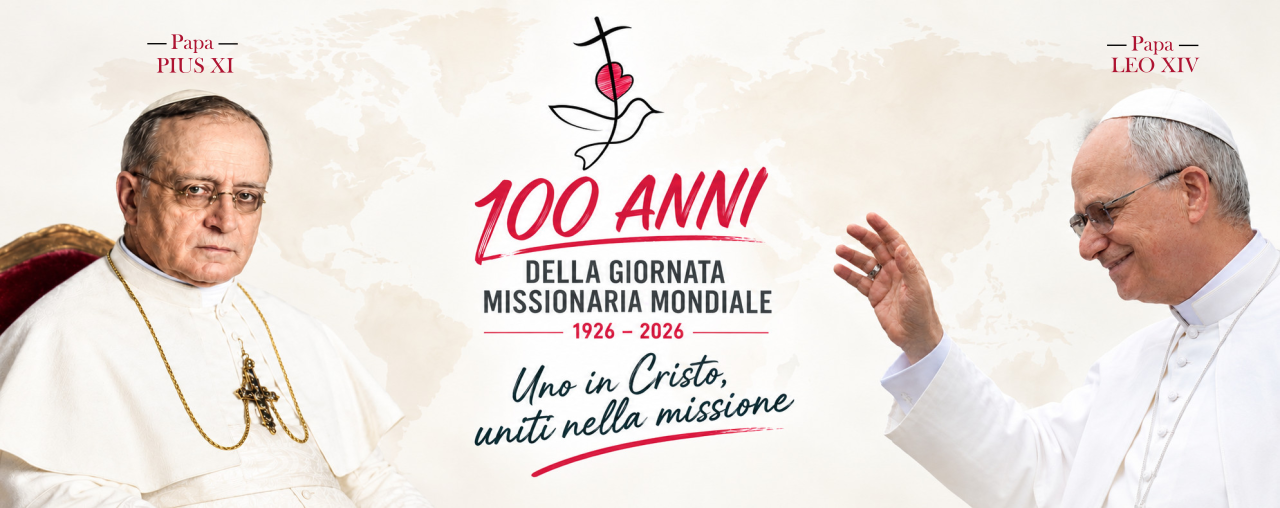
Origin of World Mission Day: The idea came in the very year in which Pope Pius XI published the encyclical on the missions Rerum Ecclesiae (1926). For his particular commitment to the missionary activity of the Church, Pius XI is remembered as the “Pope of the Missions.” It was in October 1926 that World Mission Day was celebrated for the first time. Since then, every year, the penultimate Sunday of October represents a special occasion for the faithful throughout the world to pray for missionaries, support the younger Churches and remember the missionary vocation of the entire Christian community. On 18 October this year, the 100th World Mission Day will be celebrated, with the theme chosen by Pope Leo XIV: “One in Christ, united in mission”.
For the REDEMPTORIST MISSIONARIES this centenary has a special meaning:
First because we are missionaries, second because since its beginning, that is, 100 years ago, there was a Redemptorist who contributed to reviving the way of living the mission throughout the world.
A bit of history: In 1925, at the request of Pope Pius XI, on the occasion of the Jubilee of Peace (after the First World War) and the celebration of the Holy Year (every 25 years), the Vatican Missionary Exposition was held. To do so, Pius XI called upon Dutch Cardinal Willem Marinus van Rossum (a Redemptorist), Prefect of the Sacred Congregation for the Propagation of the Faith (now the Dicastery for Evangelization – Section for First Evangelization and New Particular Churches). Thus, with a letter, the Pope granted the Cardinal the authority to organize the event. Van Rossum CSsR (1854-1932) was Prefect of Propaganda Fide from March 12, 1918, to August 30, 1932.
Van Rossum brought together all the Procurators and Representatives of the missionary institutes resident in Rome. Shortly thereafter, he established a Steering Committee, which included Angelo Roncalli, who in 1958 would be elected Bishop of Rome, taking the name John XXIII. A subcommittee composed of thirty-six members from the various missionary institutes was added to the Committee.
What was van Rossum’s most significant contribution to mission history?
We must remember that from the second half of the nineteenth century, the various forms of missionary presence around the world were more an expression of colonial political domination than a religious reality. In practice, Roman missionary methodology allowed missionaries’ nationalism to take hold, as well as the particular behavior of religious congregations that blocked the formation of a local indigenous Church.
It was then that the prefect of Propaganda Fide, Willem Van Rossum, CSsR, reworked the traditional methodology through the analysis presented by missionaries around the world. He always considered it essential to listen to the stories told by missionaries. Van Rossum thus proved to be a great organizer and strategist. He concentrated numerous missionary initiatives in Rome and broke the nationalist grip on the spread of the Catholic faith. He combined a conservative vision of ecclesiastical doctrine with foresight (the ability to see far into the future) of the Church’s development in mission.
On this basis, he built an indigenous hierarchy. His priority was the training of indigenous mission clergy.
From this presence and the way Propaganda Fide was conducted, the universal Church began a missionary journey that takes up the original source of the missionary mandate of the early Church: the account in the Acts of the Apostles.
The Congregation of the Most Holy Redeemer joyfully remembers this son of Saint Alphonsus on the centenary of the celebration of World Mission Day, because to this day the missionary Church’s commitment faithfully follows the voice of the Holy Father, which is renewed each year with his Message for the celebration of this Day.
“Missionary unity should not be understood as uniformity, but rather as the convergence of different charisms for the same purpose, namely to make Christ’s love visible and to invite everyone to encounter him. Evangelization is achieved when local communities cooperate with one another and when cultural, spiritual and liturgical differences are fully and harmoniously expressed in the same faith.” (Leo XIV, Message for WMD 2026) and on this basis the Redemptorist mission lives its charism to the full.
In fact, we must remember that “the apostolate of the Congregation is characterised, more than by some forms of activity, by its missionary dynamism, that is, by evangelisation properly speaking and by the service given to those men and groups who are most abandoned and poor, due to their spiritual and social conditions.” (Const. n.14)
Today, celebrating the centenary of the GMM will mean renewing our commitment to the legacy left by the “great missionary pastors” and their reflections, such as for example the Apostolic Letter Maximum Illud of Benedict XV (1919), the missionary magna carta, prepared in large part by van Rossum himself.
Carlos Espinoza / Scala News
Message of the Holy Father Leo XIV for the 100th World Mission Day
https://www.vatican.va/content/leo-xiv/en/messages/mission/documents/20260125-giornata-missionaria.html
Video of Pope Leo XIV:
To read more about the life of Willem van Rossum CSsR:
- “The Red Pope” biography of Cardinal van Rossum C.Ss.R. (1854–1932) published in English
https://www.cssr.news/2023/12/published-in-english-the-red-pope-biography-of-cardinal-van-rossum-c-ss-r-1854-1932/
On his contribution:
- “Willem van Rossum CSsR: A Redemptorist in the History of the Missions”
https://www.cssr.news/2022/11/willem-van-rossum-cssr-a-redemptorist-in-the-history-of-the-missions/
On the topic of the Mission:
- One Body – San Clemente: Partners in the Mission of God and Men
https://www.cssr.news/2020/05/one-body-st-clement-hofbauer-as-partner-in-mission-of-god-and-men/
Willem van Rossum and the Redemptorists:
- Celebrating the 100th Anniversary of the Redemptorists’ Presence in Vietnam
https://www.cssr.news/2024/12/cultural-night-and-inaugural-mass-of-the-jubilee-year-100-years-of-the-redemptorists-presence-in-vietnam/
*************************************