
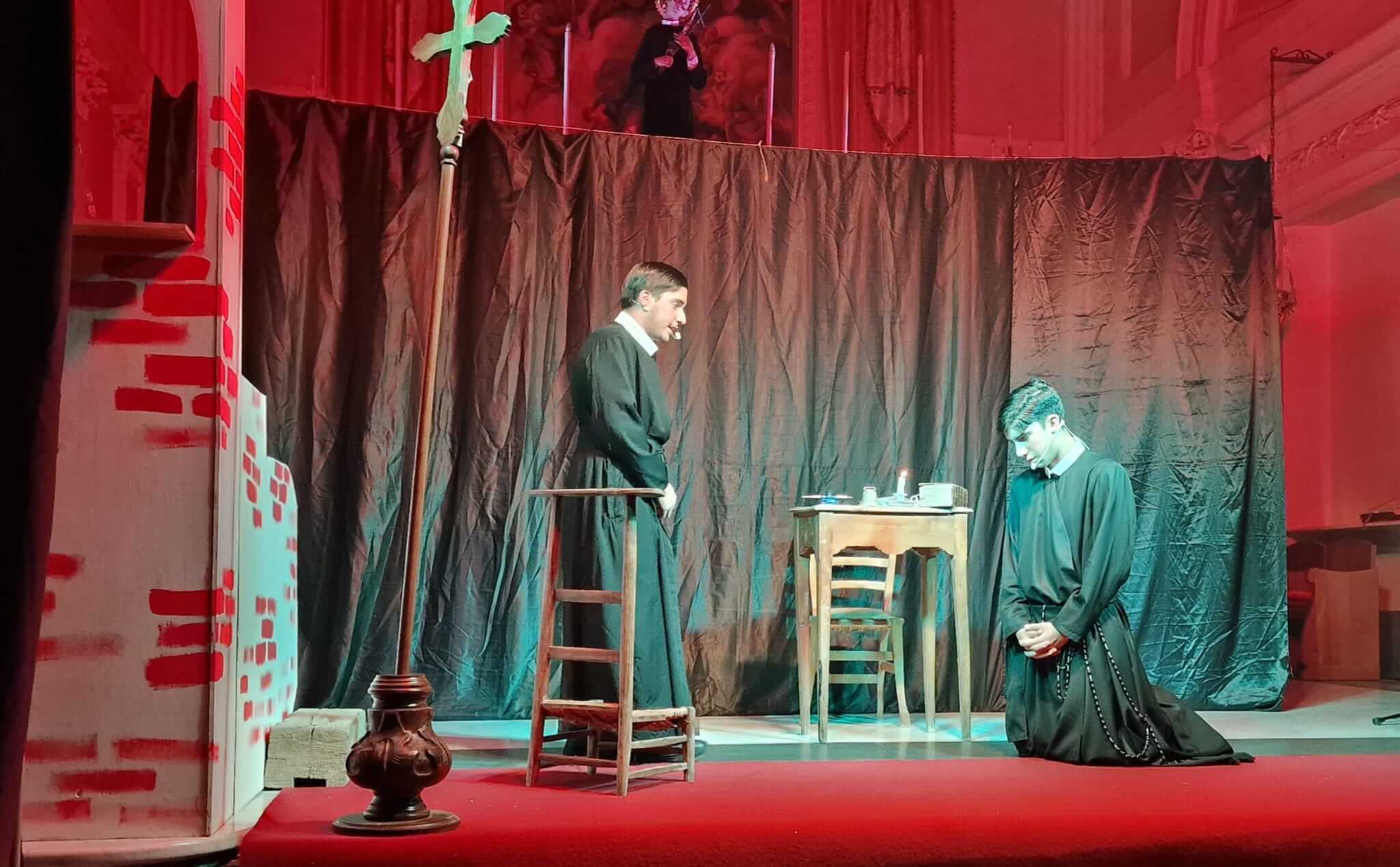
On the occasion of the celebrations for the tercentenary of the birth of Saint Gerard, the community of Ciorani, the parish and “Motherhouse” of the Congregation, is experiencing a particularly busy October. Pilgrimages with the sacred image of Saint Gerard have been organized throughout the area, along with an exhibition and a conference on his figure, his history, and his spiritual legacy.
On Sunday, October 11, at the end of the Novena celebration, presided over by the Archbishop of Salerno-Campagna-Acerno, Msgr. Andrea Bellandi, the church was packed with faithful who had come to attend the theatrical performance of the opera entitled “L’innocenza riconosciuta.”
The young people who belong to the RYVM (Redemptorist Youth and Vocational Ministry) group from the Parish of San Nicola di Bari in Ciorani have been preparing for weeks with enthusiasm and passion to bring our most important saints to life. The theme of the play is the reason why Saint Gerard was in Ciorani, sent by Saint Alphonsus in 1754. Those were just a few weeks, the saddest weeks of Saint Gerard’s life.
The play is not historical, but symbolic. The drama begins with the Saint at the window, deciding his life’s destiny: to follow the vocation to which God calls him, even though the door to his room is closed. He leaves a note on the bedside table that reads, “Forgive me, Mother, I’m going to become a saint,” and climbs out the window, aided by the sheets, to escape his destiny of glory and mission.
The drama represents the spiritual challenge of living the Gospel as a path to happiness and holiness. We thus witness the struggle between good and evil, with the presence of demons and angels, as a psychological and spiritual reading of the evils that tempt the Saint, but also of the liberating presence of Christ’s grace, which brings about the triumph of faith, perseverance, truth, and humility: “doing the will of God.”


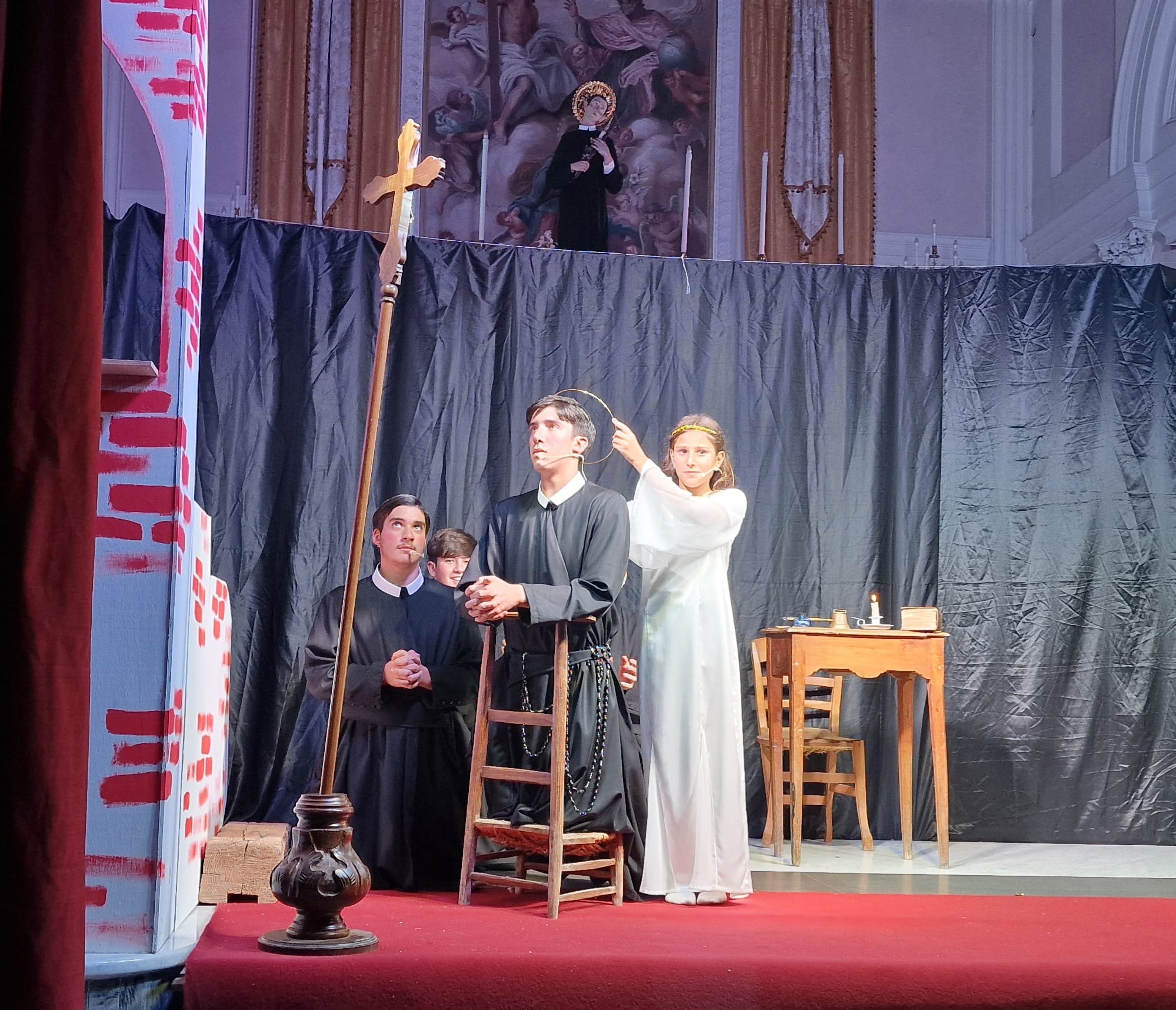





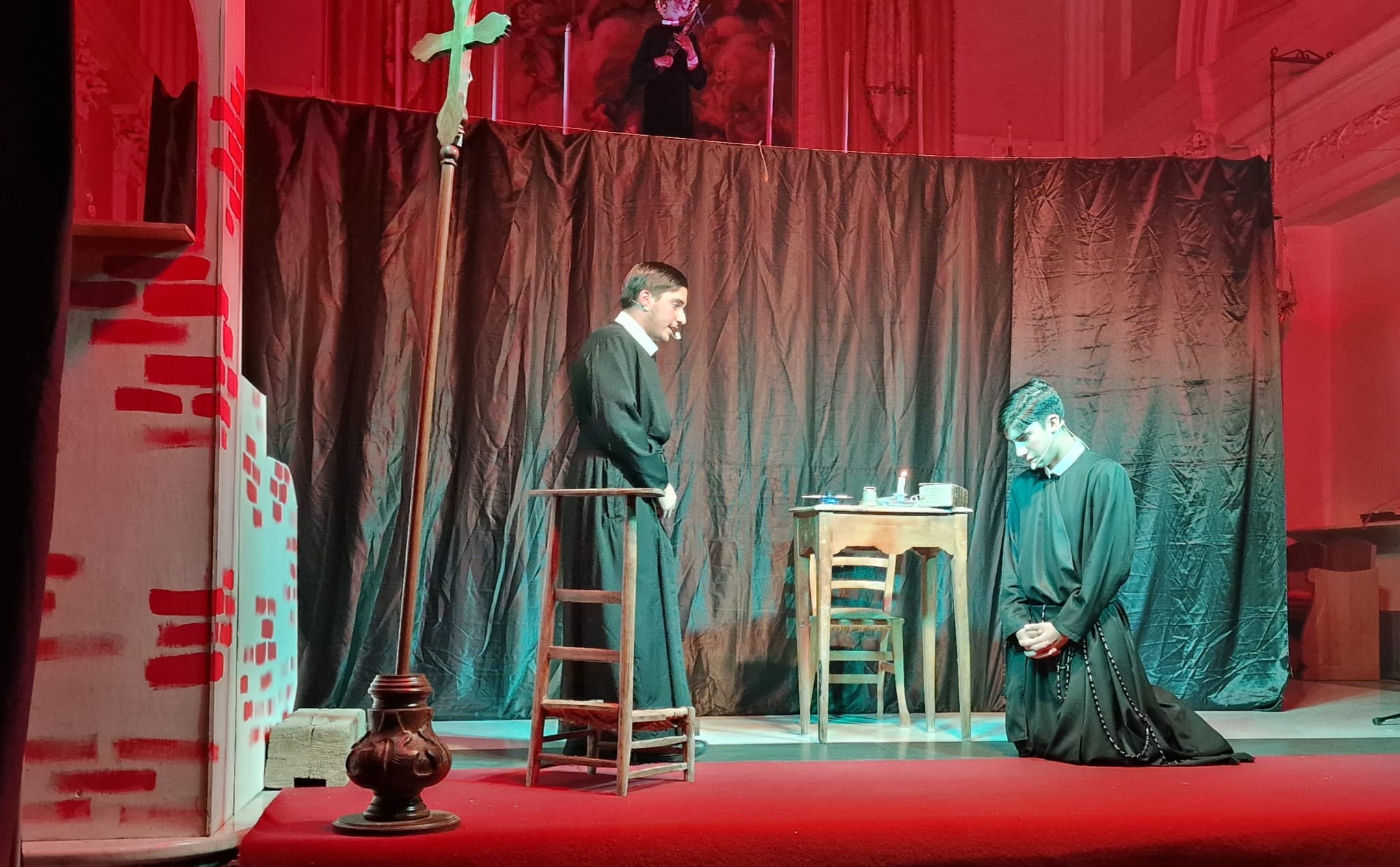
The episodes of his life aren’t recounted in succession, but we see, as in a sacred drama, the souls of Saints Gerard and Alphonsus, the struggles of a young man who wants to follow Christ, the victory of good over the snares of evil that torment a young woman torn between slander and the truth. The young people of the RYVM of Ciorani have masterfully portrayed this experience, guided by those responsible for premarital formation at the parish and with the collaboration of other catechists and parents in the community.
The story goes like this. Saint Gerard was in Lacedonia caring for the sick during an epidemic when he was falsely accused by the young Nerea Caggiano. This young woman accused Saint Gerard before his confessor of having had dishonest relations with another young woman. This slander reached Saint Gerard’s superiors and quickly spread among the population.
After receiving the accusation by letter, Saint Alphonsus summoned Saint Gerard to Pagani to explain the situation, but the young Redemptorist brother chose not to respond. Following the instructions of the Redemptorist Rule, Saint Gerard maintained silence and linked this humiliation to his spiritual experience of identifying with Christ Crucified. Saint Alphonsus punished him, inflicting a severe penance on him, and sent him to Ciorani, stripped of his religious habit, barred from contact with anyone and forbidden to receive Jesus in Holy Communion.
In Ciorani, St. Gerard experienced the darkest and most painful moments of his life, when the religious family he had joined after overcoming his prejudices and initial rejections once again marginalized him and deemed him unworthy of being religious. His silence said: the truth will come to light; God is my only defender.
A few weeks later, young Nerea fell ill and tormented by remorse, wrote again to Saint Alphonsus to acknowledge the falsity of her accusations against the young Majella. Saint Gerard left his seclusion in Ciorani and once again appeared before Saint Alphonsus in Pagani. When Saint Alphonsus asked why he had not defended himself from this great lie, Saint Gerard pointed to the book of the Rule and replied that the norms of Redemptorist life forbid justifying oneself before superiors and urge one to endure humiliations in silence.
Images of Saint Gerard are usually accompanied by two symbols: the lily and the cross. They are symbols of innocence and penance. Innocence consists in having a pure heart and allowing the truth to be brought to light by the only One who knows and defends it, namely, God. Penance consists in being aware of what enters the mind and heart, and in recognizing that no demon, neither within nor without, is more powerful than God. Everything is faith, and Saint Gerard is today, as yesterday, a powerful light in every darkness.
Fr. Laureano Del Otero Sevillano, C.Ss.R.
Rector of the Mother House of Ciorani (Italy)