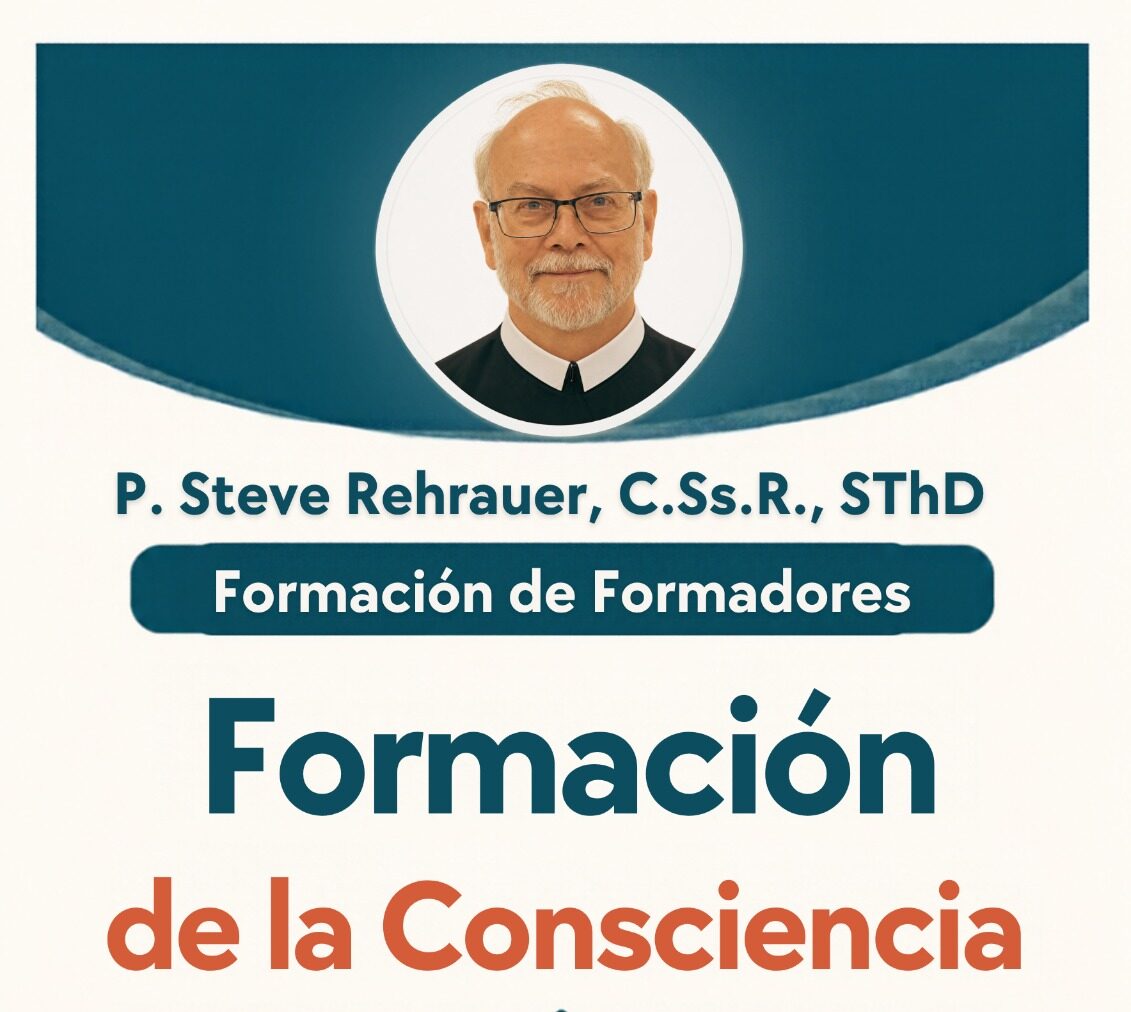
On November 20, 2026, the General Secretariat for Formation of the Congregation of the Most Holy Redeemer organized a virtual seminar for formators on the theme of “The Formation of Conscience,” led by Fr. Stephen Rehrauer, C.Ss.R. The meeting was attended by formators and religious sisters of the Redemptorist family.
In his welcoming remarks, the Superior General, Fr. Rogério Gomes, C.Ss.R., highlighted the richness of the moral tradition received from St. Alphonsus Liguori, who teaches us to take seriously the reality of people and to accompany them with the mercy of the Redeemer, helping them to discern and make free and responsible decisions in the light of the Gospel.
During his presentation, Fr. Rehrauer emphasized that the formation of conscience does not simply consist of acquiring knowledge, norms, or moral principles, but fundamentally, in learning to think like Christ.
Based on the Constitutions and Statutes of the Congregation, he highlighted the apostolic purpose of Redemptorist formation and the need to integrate intelligence, will, and affections in order to fully respond to our missionary vocation.
She also presented the contributions of contemporary psychology to understanding the development of moral conscience, highlighting the influence of family, personal relationships, and life experiences. She emphasized the importance of direct contact with the poor and abandoned, as well as the importance of self-examination to learn from our own decisions.
One of the central aspects of the meeting was the responsibility of the formators to continue forming their own conscience, since it is a process that does not end with the initial formation, but extends throughout life.
The seminar offered opportunities for dialogue and exchange among the participants. At the conclusion of his presentation, Fr. Rehrauer remarked:
“The formation of conscience truly consists of making us free, allowing us to live with the freedom of the children of God and awakening in us a greater capacity to love others. If we understand it in this way, it is not a burden, but a joy and an adventure.”
To facilitate access to the meeting’s content, a recording with selectable subtitles in seven languages has been prepared: English, Spanish, Italian, French, Portuguese, Polish, and Vietnamese. Each person can choose their language while watching the video, which will retain the original audio.
General Secretariat for Formation