The first Redemptorist Missionaries were founded in Latin America in the 19th century. The foundations and missions initially took place in Chile and Colombia, marking the definitive presence of the Missionaries of Saint Alphonsus on the continent. However, among the simpler populations, it was not difficult to identify the figure of a young Redemptorist renowned for his holiness; his name was Gerard Majella.
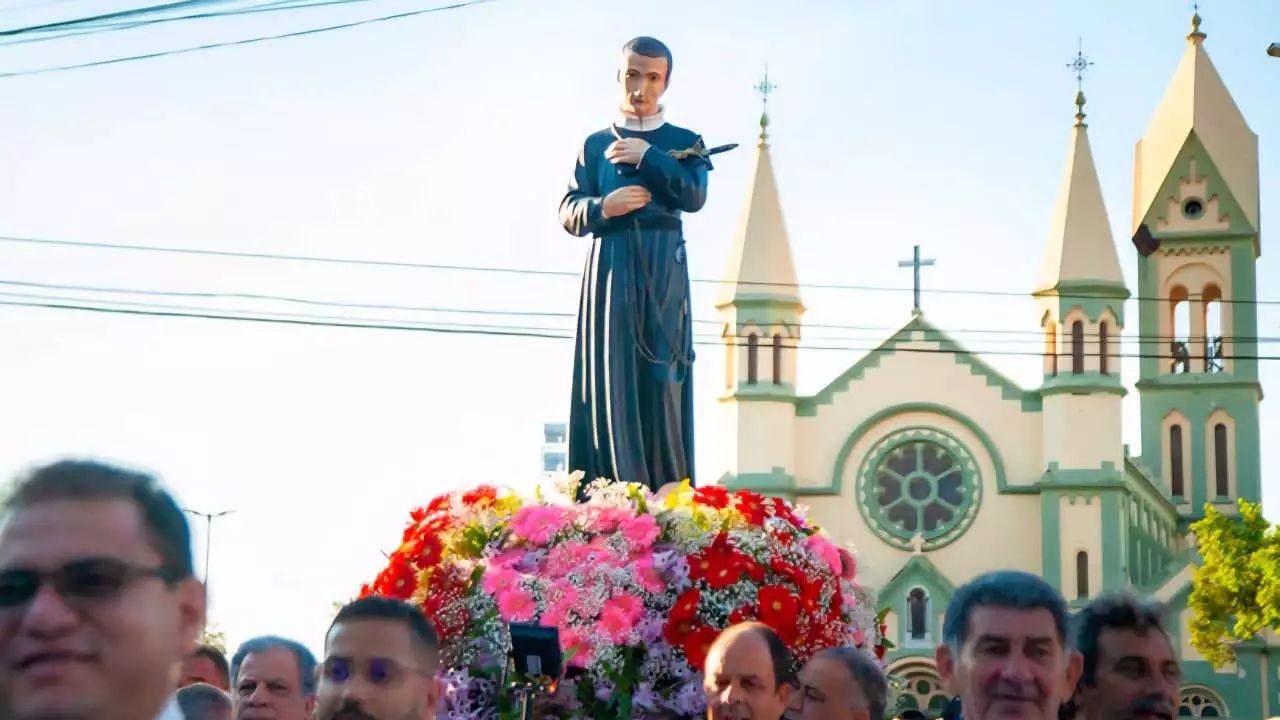
Traveling through the villages and towns of the interior of the continent, it’s easy to find in some chapel or oratory the image of the Redemptorist Missionary embracing the Redeemer’s Cross. In some homes, some have a painting of Saint Gerard, and, above all, a grace obtained, a story of devotion, or an ex voto. There are also those who carry a medal with the image of the young man from Muro Lucano.
Parishes and communities were formed under the intercession of Saint Gerard, and in some cities, he is the main patron saint. His feast days are major religious events, where faith moves: with processions, songs, rosaries, and celebrations. From altars to the simplest homes, Saint Gerard has touched hearts and changed lives in Latin America. Mothers began to honor him in their children, who bear his name. Entire families pass down devotion to Saint Gerard from generation to generation.
All this respect for Saint Gerard is understandable; he is a friend of the poor. Although he lived in another era and on another continent, his spirituality resonates particularly strongly in Latin America and the Caribbean, regions characterized by great social contrasts, structural poverty, vibrant faith, and popular resistance. Saint Gerard faced many difficulties from childhood: the loss of his father, family poverty, and the lack of understanding of many as he followed his vocation. Despite all the setbacks, he lived his faith concretely, deeply rooted in charity, obedience, and solidarity with the poorest and most abandoned.
His way of life inspires a parallel among the people with their own reality: it is the experience of thousands of people, men and women of Latin America and the Caribbean, who, even in the face of injustice, live faith, joy, and commitment to the Gospel. Devotion to Saint Geraldo, incarnate and accessible, translates into popular theology and also into a preference for the poor, fundamental signs of the Church in Latin America, especially after the Medellín Conference (1968) and reaffirmed in the Aparecida Document (2007). The Latin American bishops recall that:
«The suffering faces of so many marginalized or discarded brothers and sisters directly challenge our Christian conscience and lead us to a renewed preferential option for the poor» (DAp, n. 393).
Saint Gerard lived this option intensely: he embraced the Cross, but also the humblest; he trusted in Providence even in times of scarcity and dedicated himself totally to the service of the heavenly Kingdom. His spirituality also translates into resistance; it is a powerful call: he is recognized as the patron saint of mothers, unborn children, and families in difficulty—central figures in the daily resistance of so many Latin American and Caribbean families in the face of violence, forced migration, exclusion, and unemployment.
In the urban and rural contexts of Latin America and the Caribbean, the presence of Saint Gerard Majella inspires communities seeking to live the Gospel in practice: in solidarity initiatives, in social pastoral work, in the struggle for land, work, and housing. Saint Gerard demonstrates that holiness is not reserved for the powerful and intellectuals, but is possible in everyday life, in humble and silent service, in total dedication to God and our brothers and sisters.
As a Redemptorist missionary brother, Saint Gerard also strengthens the role of consecrated religious life and the laity in the Church’s evangelizing mission, strongly promoted in recent years by the Latin American and Caribbean Conference. His witness challenges today’s young people, especially in times of crisis and new technologies, to grasp the meaning of life in times of despair and to live radically the promise of the Kingdom of God.
Saint Gerard is a prophetic sign for the Redemptorists of Latin America and the Caribbean: a poor young man, brother of the poor, yet profoundly holy, who found meaning in his life in silent service and in the Redemptive Cross. His legacy lives on among the brothers of his vocation, embodied in the tenderness and willingness to serve of countless Redemptorist Brothers on this continent—clear signs of God’s presence in the journey of the peoples of Latin America and the Caribbean.
Fr. Ian Lucas Lopes de Castro, C.Ss.R.
Brother Bento Community – Potim – SP
Province of Our Lady of Aparecida – Brazil