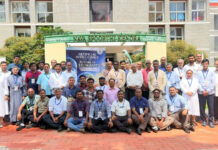

National synodal teams across Asia have been encouraged to help dioceses address their existing pastoral challenges through synodal methods rather than adding new programs, targets, or administrative burdens. This message emerged during a discussion on strengthening synodal engagement held on September 2 at the Joseph Nattaya Conference Hall, Baan Phu Waan, Bangkok, as part of a three-day gathering of national synodal teams.
The session was led by Fr. Vimal Tirimanna, CSsR., of Sri Lanka, a member of the Commission for Synodality. Participants reflected on a practical question: “What is one concrete thing our national synodal team can do within the next six months to strengthen synodal engagement with our bishops, clergy, and pastoral councils?”
The discussion emphasized that synodality must move beyond meetings and documents and become part of the ordinary life of dioceses and parishes. National teams were urged to focus on helping local Churches work more collaboratively through listening, participation, discernment, and shared responsibility.


One of the major themes was the importance of formation. Participants noted that synodal formation should begin during seminary training. Several observed that many priests are educated primarily to complete tasks and responsibilities, often without sufficient attention to participatory processes and communal discernment. Integrating synodality into priestly formation would help future priests understand the Church as the People of God, where all the baptized have a role in its life and mission.
Fr. Tirimanna recalled that the Second Vatican Council had already presented this vision of the Church, but acknowledged that it has not always been fully incorporated into seminary programs. While some seminaries have begun introducing synodal practices, participants agreed that broader implementation is needed.
The conversation also highlighted the need for ongoing formation among priests already serving in dioceses and religious congregations. Participants stressed that the culture within the clergy has a significant impact on how parishes listen, discern, and make decisions. Synodality, therefore, must become part of lifelong formation and pastoral leadership.
Another important topic was the role of national synodal teams in accompanying significant ecclesial decisions. One participant shared the example of an upcoming process to select a new archbishop in his country. He suggested that synodal teams could facilitate assemblies involving clergy, religious, and lay faithful, encouraging prayerful discernment and broad participation throughout the process.
Participants also explored practical ways to introduce synodal practices into existing parish life. Rather than creating entirely new structures, they proposed using methods such as spiritual conversation during parish gatherings, Advent programs, and Lenten activities. Synodality, they said, should become a renewed way of working together rather than another item added to an already busy pastoral calendar.
A central proposal that emerged was the need for national synodal teams to rethink how they present their mission to dioceses. Instead of being perceived as groups bringing additional projects and expectations, they should position themselves as partners helping dioceses achieve the pastoral goals they already have.
Participants suggested that synodal teams begin by listening to diocesan leaders: understanding their priorities, identifying their challenges, and exploring where pastoral initiatives may be struggling. The role of the synodal team would then be to offer practical assistance by applying synodal methods to those existing situations.
In this vision, national synodal teams act less as program managers and more as facilitators of synodality. Their task is to help dioceses discover how listening, participation, and shared discernment can strengthen pastoral effectiveness and mission.
A key question repeatedly raised during the discussion was: “How can synodality help you achieve what you have not yet been able to achieve in your diocese or parish?” Participants agreed that every local Church has unique needs and priorities, and synodal engagement must be adapted to those realities rather than imposed through uniform solutions.
The session concluded with a strong emphasis on practical and achievable action. National synodal teams were encouraged to identify one realistic initiative that can be implemented within the next six months and that responds directly to a genuine pastoral need.
The discussion reflected a broader theme running throughout the Asian synodal gathering: synodality will take root not through the creation of more structures, but through a transformation in the way the Church listens, discerns, and works together. The challenge for national teams is to help bishops, clergy, religious, and lay faithful recognize that synodality is not an additional program competing for attention, but a way of strengthening the pastoral mission already entrusted to the Church.
(Source: www.rvasia.org)
Photos by Radio Veritas