



The liturgical feast of Blessed Maria Celeste Crostarosa was celebrated in Foggia on Friday, 11 September 2026, with a special afternoon of prayer and thanksgiving Holy Mass. The programme began at 5:00 p.m. with the Holy Rosary, accompanied by meditations drawn from the writings of Blessed Maria Celeste. At 6:00 p.m., the Holy Mass was celebrated by Fr. Rogério Gomes, C.Ss.R., Superior General of the Redemptorists, concelebrated by the Redemptorist confreres, guest priests, with the participation of the Redemptoristines of the Community and the faithful.
In his homily, Fr. Rogério reflected on Maria Celeste’s profound contemplative experience and her ability to remain faithful to Christ amid trials, misunderstandings, and suffering. True contemplation, he emphasized, does not distance us from reality but enables us to see the world with the eyes and heart of God, becoming more sensitive to the needs and sufferings of others.

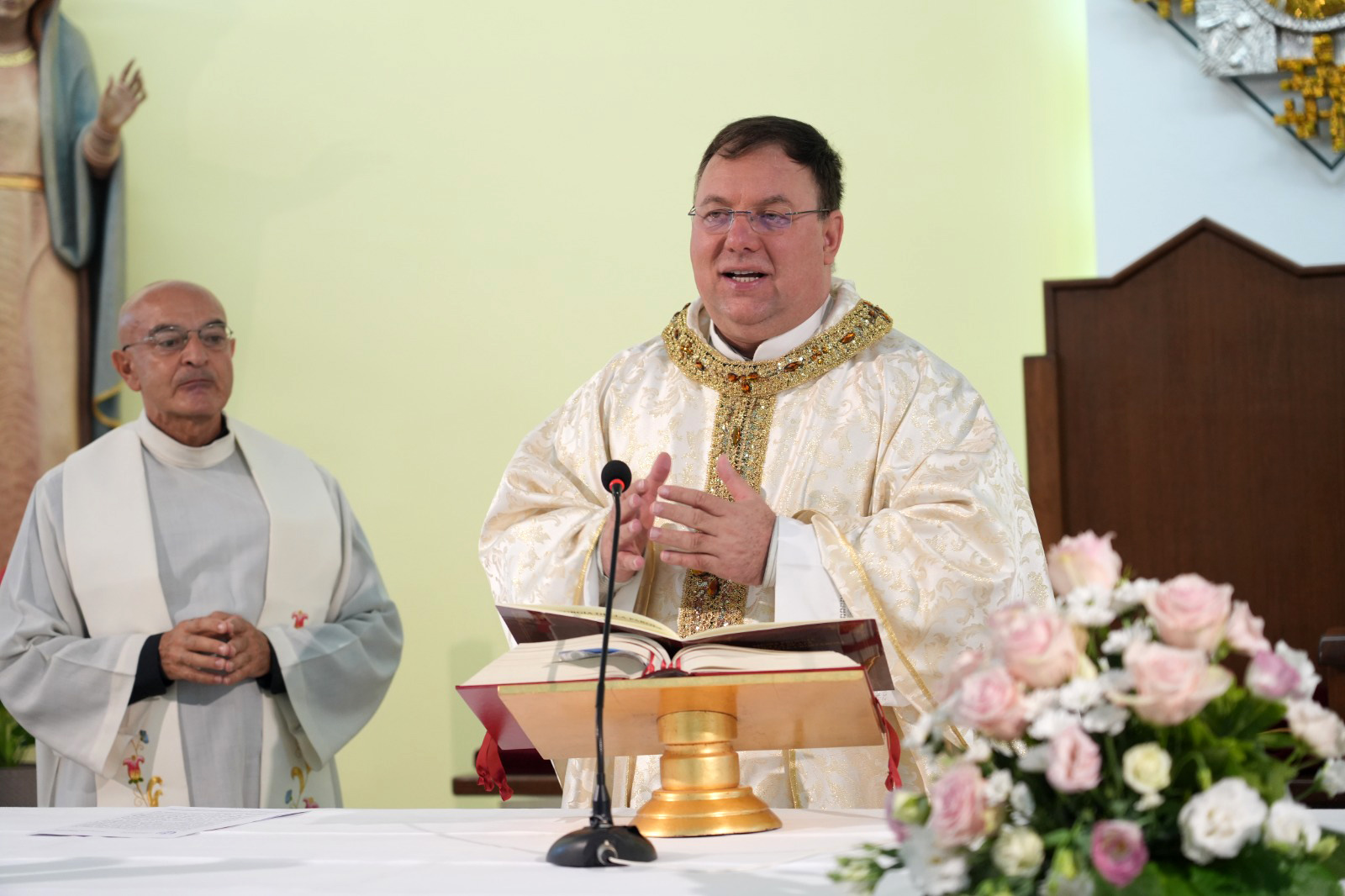
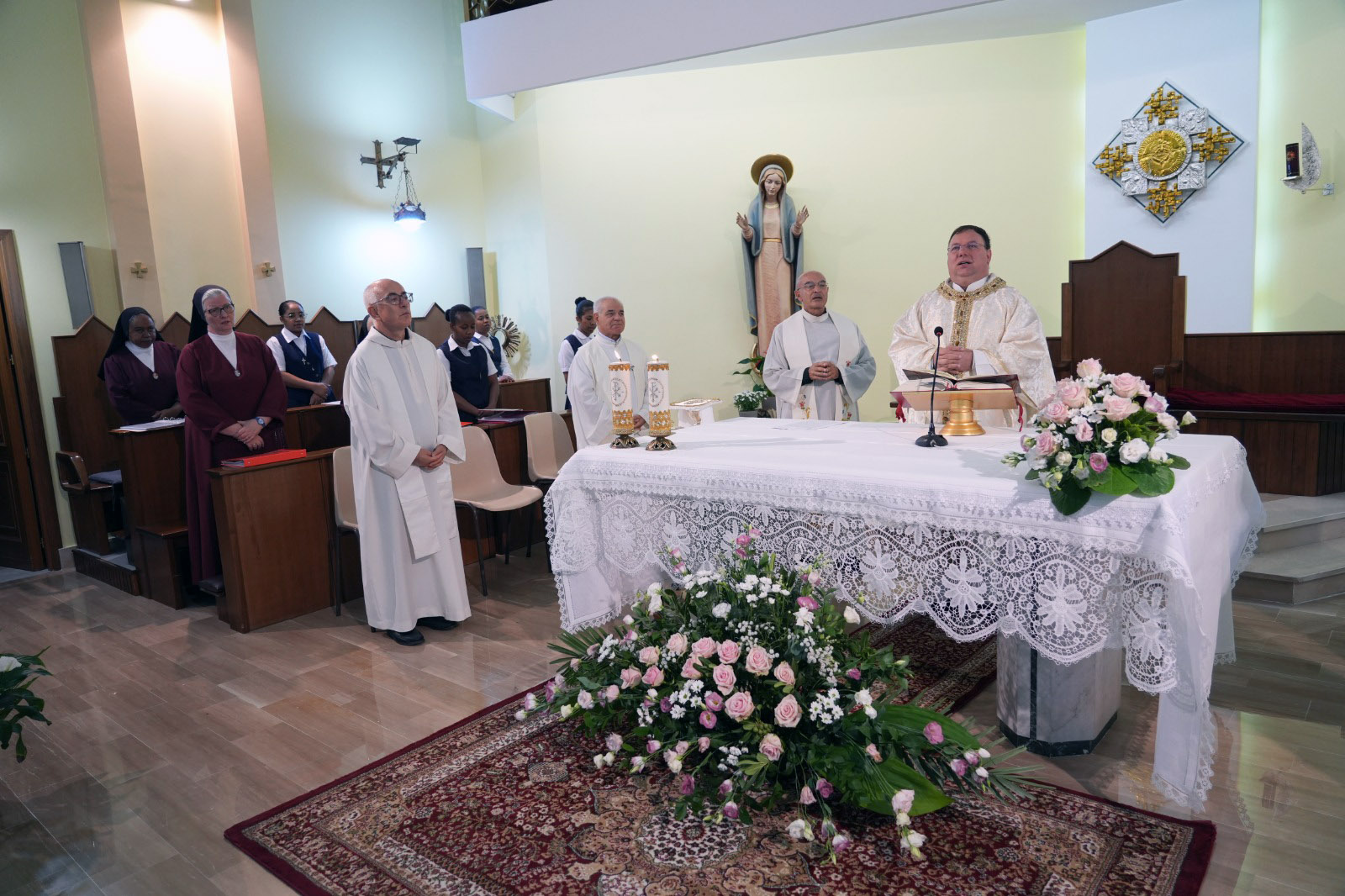


Reflecting on the Gospel of John, Fr. Rogério underlined one of the great challenges of consecrated life, drawing on the words: “This is my commandment: that you love one another as I have loved you. No one has greater love than this, to lay down one’s life for one’s friends” (Jn 15:12–13) — to remain in the love of Christ. It is in this love, which has its source in the love of the Father, that every vocation finds its origin and strength. Those who remain in Christ’s love are called to become signs of God’s love in the world.
Maria Celeste lived this vocation through many difficulties. Her life was marked by misunderstandings, opposition, separation, and trials. Yet she remained faithful to the spiritual mission she believed God had entrusted to her. Her journey eventually led her to Foggia in 1738, where she founded a monastery and was able to give fuller expression to the Rule and spiritual vision that had shaped her vocation.


For Blessed Maria Celeste, the love received from Christ became the gift of herself to others. Her contemplative vocation became a life of communion, care, forgiveness, and service. Her life was marked by struggles and human frailty, but also by a deep thirst for God. Her entire vocation became a Viva Memoria—a living memory of the Redeemer.
This year’s celebration also takes place in a significant period for the Redemptorist family. On 18 June 2016, during a ceremony in Foggia, Cardinal Angelo Amato, acting as the delegate of Pope Francis, declared Sister Maria Celeste Crostarosa, Foundress of the Redemptoristine Nuns, a Blessed of the Catholic Church. Her liturgical memorial is celebrated on 11 September.
The celebration of Blessed Maria Celeste Crostarosa is therefore more than the remembrance of an important figure from the past. Her witness continues to speak to the Church today. Her life teaches us that contemplation must lead to compassion; that union with Christ must transform our relationships; and that love must become concrete in forgiveness, service, patience, and care for others.
As the Redemptorist family and the faithful gathered in Foggia, they remembered not only a woman whose profound friendship with Christ became a gift to the Church, but also a woman whose life continues to invite the Church to remain in Christ’s love and to become a living memory of the Redeemer in the world.
ST/ Scala News
Below is the homily by Fr Rogério Gomes CSsR, in full:
Homily on the occasion of the liturgical memorial of Blessed Mother Maria Celeste Crostarosa, nun and founder of the Order of the Most Holy Redeemer (11 September)
Dear Sisters, dear Confreres and Faithful,
- We are gathered here today to celebrate the liturgical memorial of Blessed Maria Celeste Crostarosa. As we well know, Maria Celeste did not have an easy life. As the text of her biography, published by the Congregation for the Causes of Saints, reminds us, ‘She endured these “tribulations” with patience and great spiritual maturity, knowing that she had to share in the Paschal journey of the Lord Jesus. In 1738 she accepted the invitation to settle in Foggia, thus enabling her to establish a community in accordance with her vision of religious consecration. Thus, the following year, she founded the Conservatory of the Most Holy Saviour, aimed at the education of middle-class girls. In Foggia, the Servant of God put into practice the project that had been inspired in her, guiding her fellow sisters and numerous girls to bear daily witness to the memory of Christ the Redeemer’. [1]
- Ten years on from her beatification, celebrated by Pope Francis on 18 June 2016, we are here, in this very place where God called her, established a covenant of love with her, and led her to live a profound friendship with Christ. Maria Celeste welcomed this love, cherished it and lived it out in the depths of her contemplative experience. But she did not keep it to herself. She knew how to communicate it in a tangible way in her daily life, in her relationships with her fellow sisters—which were lived amidst both difficulties and grace—and with all those whom the Lord placed on her path, to the point of making her own life a living memorial of the Redeemer.
- The reading from the prophet Hosea (Hos 2:16b, 17b, 21–22) presents us with a very beautiful experience: ‘speaking to the heart’. Contemplation is possible only when we allow God to touch our hearts. In the Semitic world, the heart is regarded as the centre of human consciousness, the deepest part of the person, where we are truly who we are. It is there, in the depths of our being, that God speaks, entices and captivates.
- When we allow ourselves to be captivated by God, we begin to contemplate the world through God’s eyes and heart. And, precisely for this reason, we too suffer when we see the world wounded by so many contradictions, injustices and sufferings. Contemplation does not distance us from reality; on the contrary, it makes us even more sensitive to it. It takes on a dimension of pathos, that is, it expresses the capacity to allow ourselves to be touched, to feel compassion, to enter into relationship and to make the other’s pain our own. For this reason, those who contemplate the world through God’s eyes and heart also become sensitive to its sufferings and contradictions. The theologian Jürgen Moltmann applies this concept to God when he speaks of divine pathos: God does not remain indifferent to human history, but, precisely because he loves, he allows himself to be moved by the world’s suffering.
- The Gospel (cf. Jn 15:9–17) we have just heard proposes something radical to us: ‘This is my commandment: that you love one another, just as I have loved you. No one has greater love than this: to lay down one’s life for one’s friends’ (Jn 15:12–13). Perhaps this Gospel proposal may seem too demanding to us, difficult to live out in our human condition. I believe that the great challenge for us, in consecrated life, is to remain in the love of Christ, which has its source in the love of the Father. It is precisely by remaining in this love that we find the source of our vocation and that, from this source, we become a sign of God’s love for the world.
- However, when we contemplate the witness of our saints and of Blessed Maria Celeste, we see that, without denying their own humanity, their passions, frailties and contradictions, they were able to remain united to the vine, which is Christ, the Redeemer. ‘If I fall into my weaknesses and miseries, you sustain me with a living trust in you; thus you extend your loving hand to me and look upon me with eyes of divine kindness, and I return to my good.’[2] It is from this communion with Him that they received the grace to persevere on the journey and to become witnesses to the fact that holiness is a vocation for everyone. They attained holiness not because they were angels or people detached from the world, but because they were profoundly human, with their struggles and limitations, and, above all, because they carried in their hearts a deep thirst for God (cf. Ps 41–42/42–43).
- The Apostle Paul (cf. Col 3:12–17) offers us practical guidance on how the love of Christ can become a living reality within us and in our relationships. This love is manifested in our ability to clothe ourselves in feelings of mercy, kindness, humility, gentleness and patience, to bear with one another and to forgive one another, just as the Lord has forgiven us.
- At the heart of it all is charity, which unites us and leads to perfect unity. It is charity that enables the peace of Christ to dwell in our hearts and his Word to transform our relationships, our choices and our way of life. Thus, love ceases to be merely an ideal and becomes a concrete way of life, lived out in our daily lives, in our words and deeds, doing everything in the name of the Lord Jesus and giving thanks to God the Father.
- Reflecting on what we have heard from the Word of God today, we can say that Blessed Maria Celeste embraced her consecration as a journey of profound communion with Christ, marked by contemplation, the cross and concrete love for others. She had a profound experience of God, allowing herself to be touched and transformed by his love, and she learnt to remain faithful to this love even amidst tribulations, misunderstandings and trials. Her contemplative spirituality did not distance her from reality, but made her even more sensitive to the needs and sufferings of those whom God placed on her path. Thus, the love she received from Christ became for her a concrete gift of self, expressed in care, forgiveness, communion and service. Her whole life gradually became a true, living memorial of the Redeemer – not as that of a person above the human condition, but as that of a deeply human woman, with her struggles, passions, frailties and limitations, open to the action of grace.
- Dearest Sisters, I would like to conclude this homily with a short prayer by Sister Maria Celeste to the Blessed Virgin: “Dear Mother and my Lady Mary, purest lily of the Trinity, resplendent rose of heavenly sweetness, from whom was born the King of Heaven, who chose to be nourished by your milk; please nourish my soul with divine love³. Be my guide and teacher, and with your mercy protect and defend me from the snares of the devil. Awaken my heart to love and divine love. Deign to regard me as your true daughter; I take refuge in your mantle today and always. At the hour of my death, you are my hope after Jesus. I beg you, on this day and always, to guard my soul from every stain of sin. Bless me, my Mother and Lady, and I give you my heart, so that you may place it and keep it within the most pure heart of my Spouse, Jesus Christ, your beloved Son. Amen”.[3]
Fr Rogério Gomes, C.Ss.R
Superior General
Foggia, 11 September 2026.
[1] Cf. https://www.causesanti.va/it/santi-e-beati/maria-celeste-crostarosa.html
[2] CROSTAROSA, Maria Celeste. Conversations of the Soul with her Spouse Jesus. Materdomini (AV): San Gerardo Publishers, 2022, p. 147.
[3] CROSTAROSA, Maria Celeste. The Inner Garden of Divine Love. Materdomini (AV): San Gerardo Publishers, 2020. vol. 1, p. 40.


