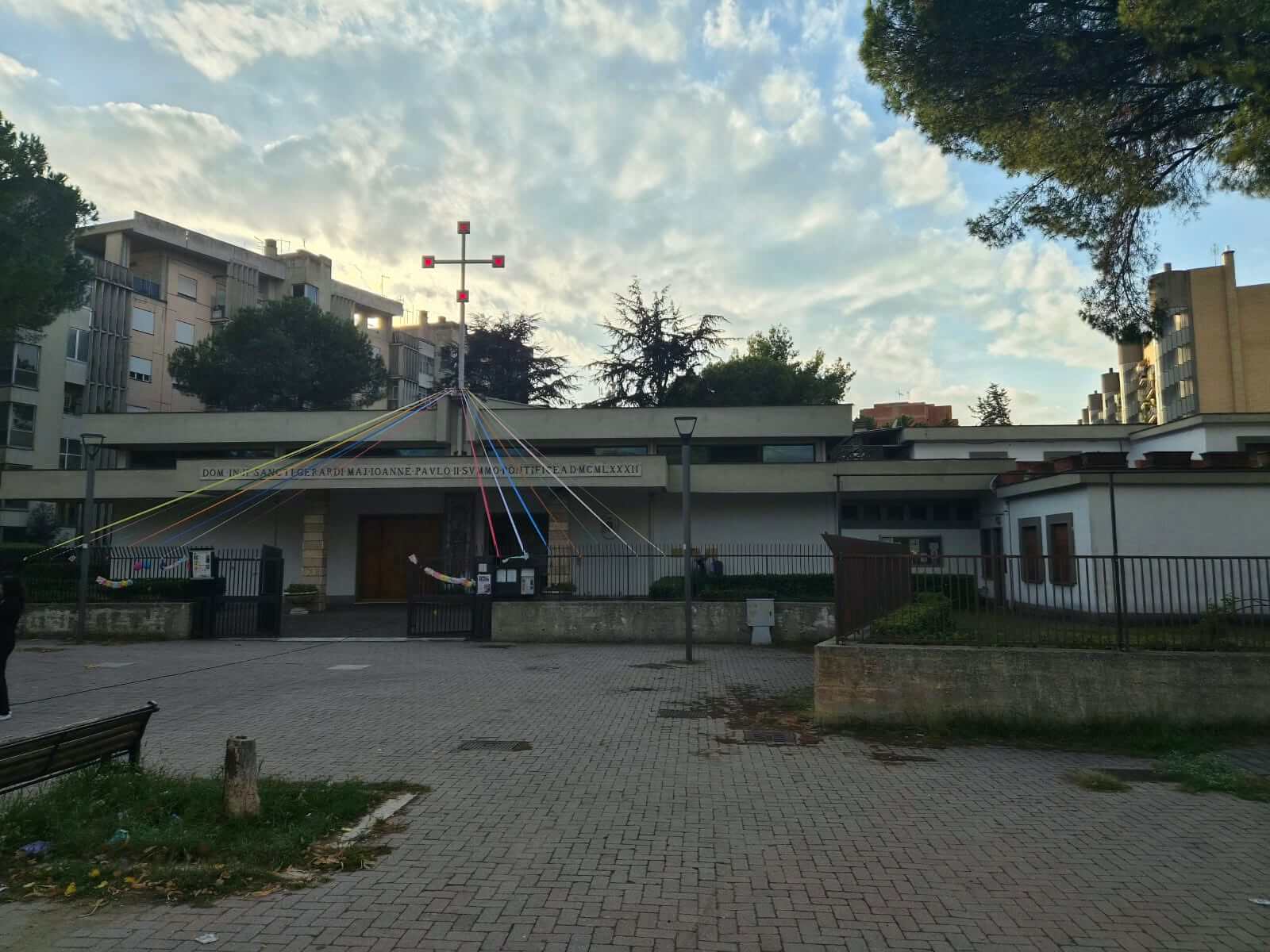
Entering the populous Prenestino-Casilino neighborhood, located in the heart of Rome’s outskirts, one is pleasantly surprised. Across a wide, tree-lined square, enlivened by the bustle of people and running children, appears the facade of a modern church; nestled among apartment blocks, it was built in the early 1980s and dedicated to Saint Gerard Maiella, in Via Romolo Balzani at the initiative of its first parish priest, Don Benito Caschetta, a native of the Melfi area in the Basilicata region.
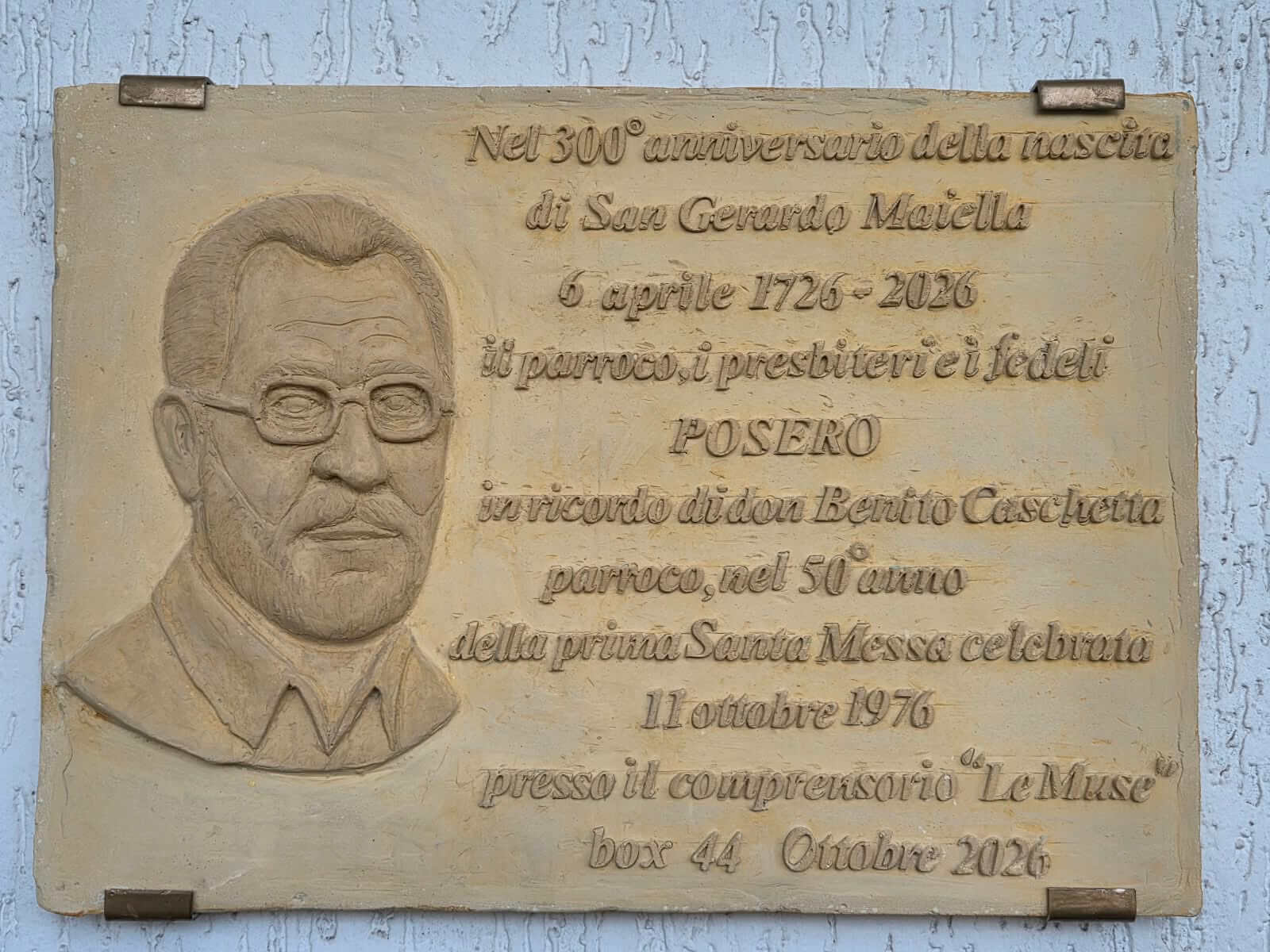
The parish complex originated within the “Le Muse” housing development—specifically in Unit 44, where the “first Mass” was celebrated on October 11, 1976, as commemorated by a plaque on the side wall of the church. The parish was officially established on April 20, 1978, by a decree signed by Cardinal Vicar Ugo Poletti, separating its territory from the nearby parish of Saints Marcellinus and Peter ad Duas Lauros. This history reflects the origins of most Roman parishes, which arose in expanding outlying neighborhoods under less-than-ideal conditions. Furthermore, the parish holds precious memories: it was visited by Saint John Paul II on November 20, 1982, and designated by the same Pope as a titular church with the title of Saint Gerard Maiella (November 26, 1994).
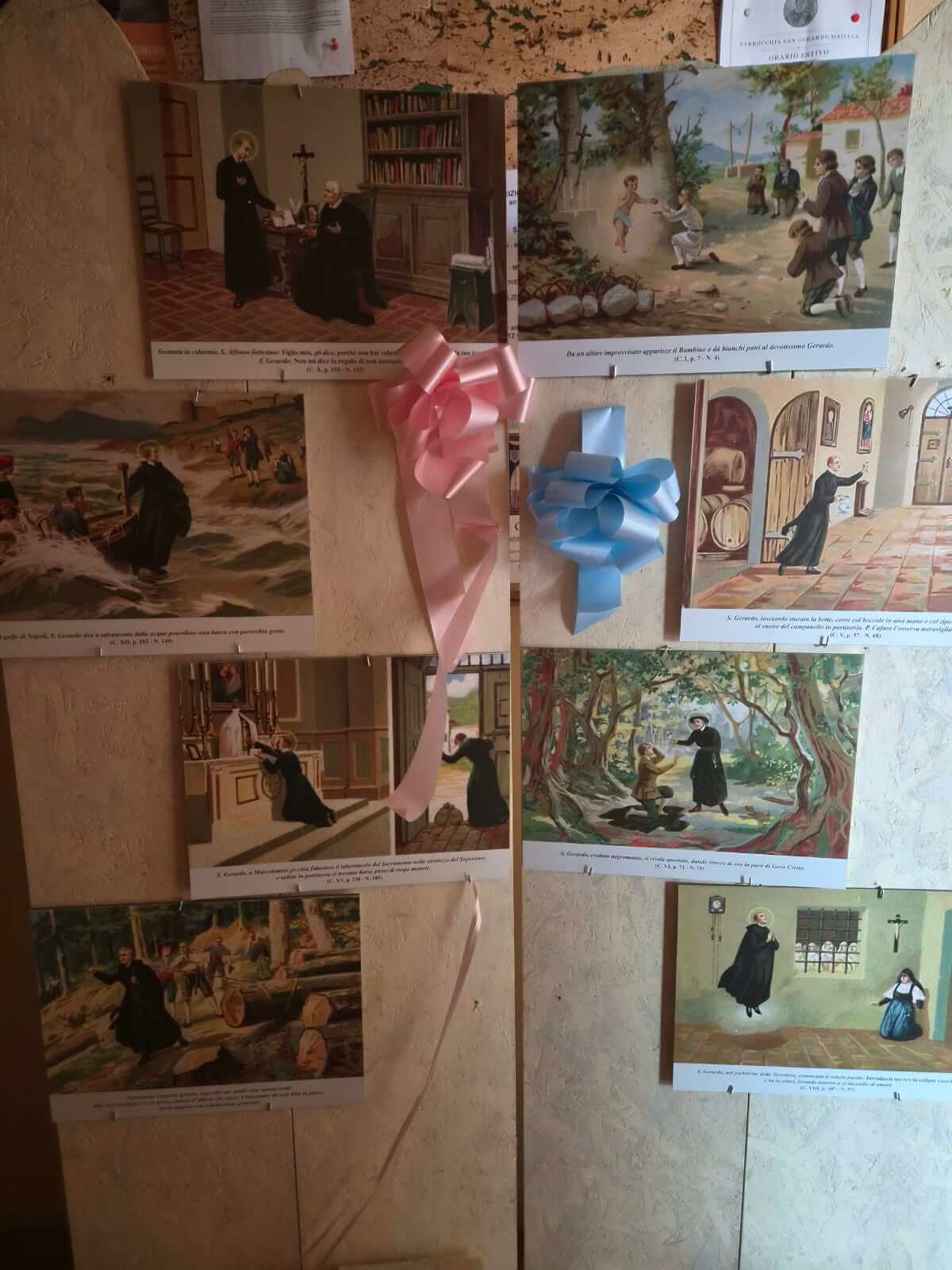
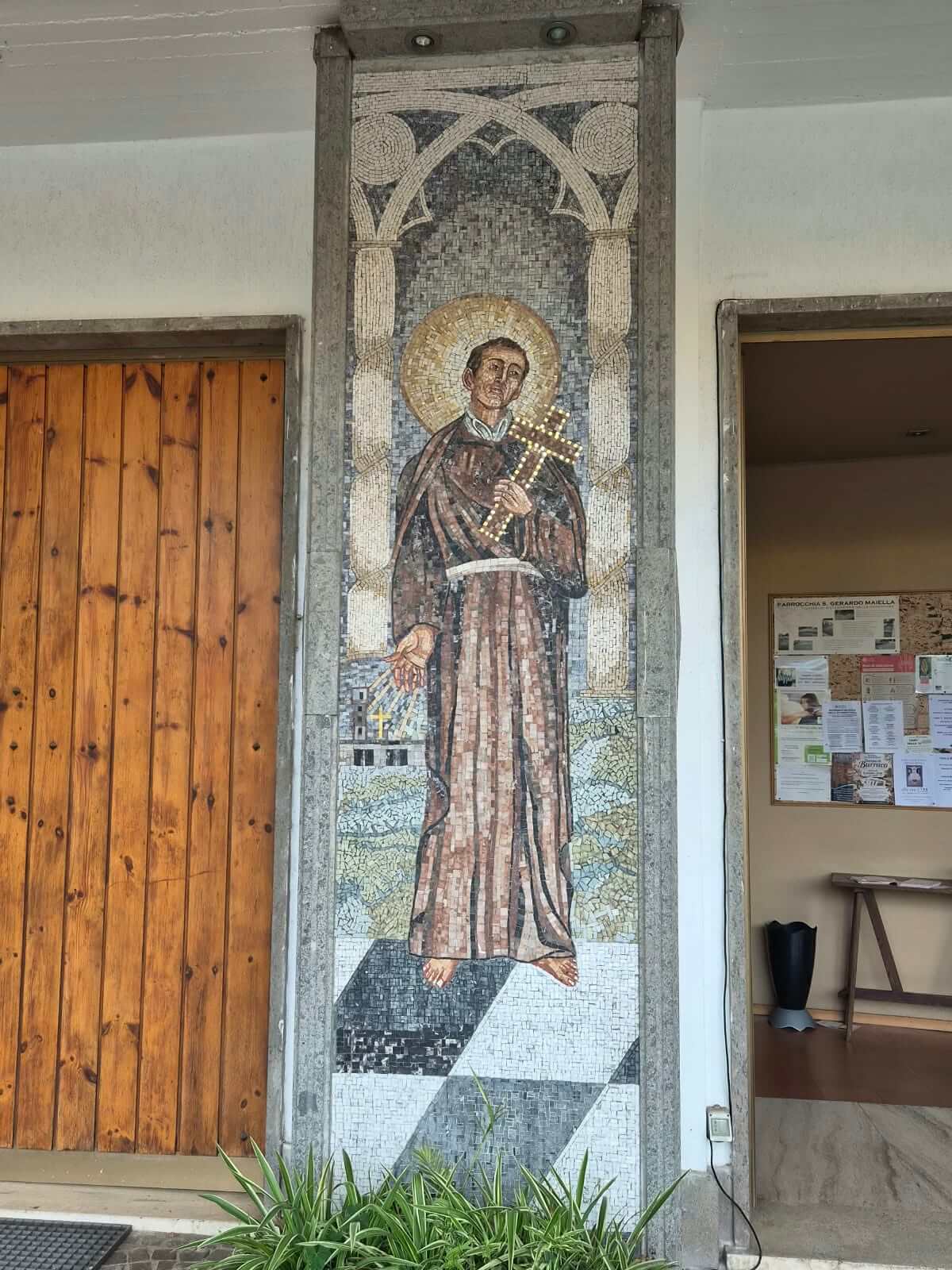
Here, though Saint Gerard never visited this place during his lifetime—every corner speaks of him! At the entrance to the liturgical hall, a mosaic created by a Latin American priest depicts the saint in ecstasy, barefoot and holding a luminous cross. An exhibition panel, displaying small reproductions of scenes from his life, features two ribbons—one blue and one pink—as a sign of gratitude for the birth of two children. This custom, similar to that observed at the Shrine of Saint Gerard and in many other places of worship dedicated to the patron saint of mothers and children, also finds an expressive visual representation here.
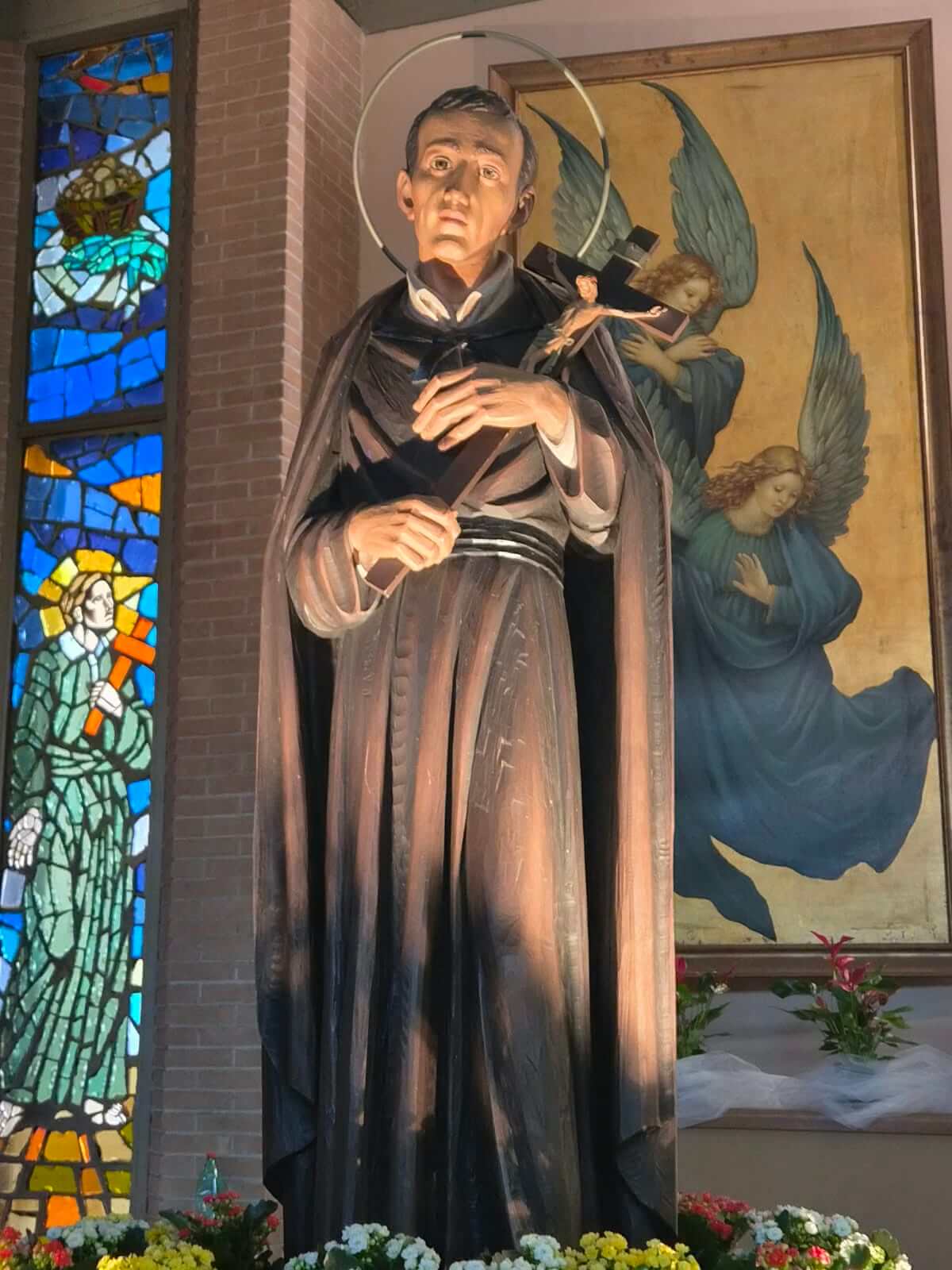
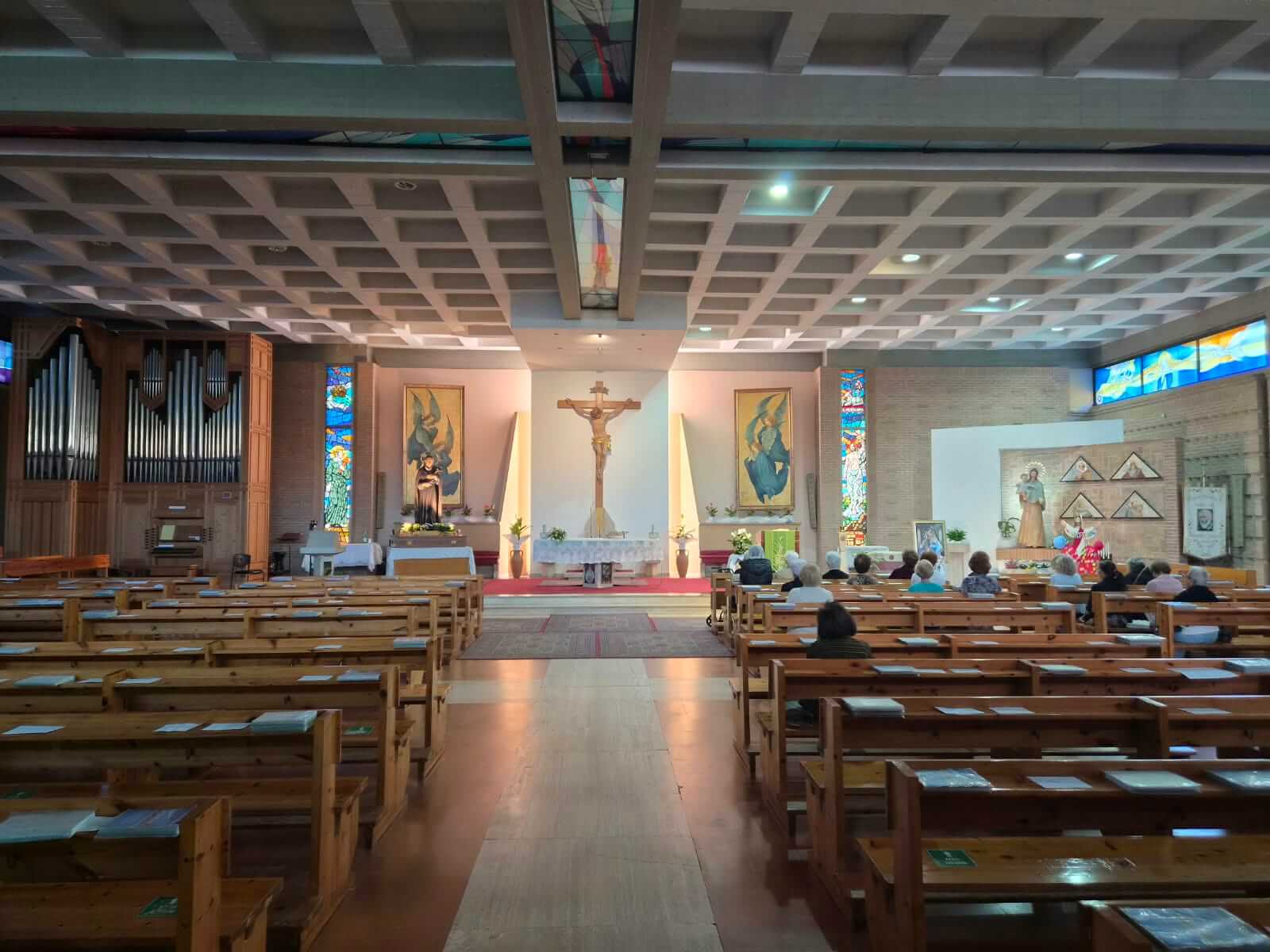
Upon entering the spacious liturgical hall, the statue of the Saint immediately draws the eye. Though unusual compared to the traditional iconography of Saint Gerard, it is a magnificent example of wood carving, situated on a processional platform to the left of the altar. Gerard is depicted with a thin and suffering face, yet with a serene and meditative air, clutching his crucifix to his chest. It is a masterful artistic exercise in realism that deliberately avoids idealizing the figure, striving instead for a more faithful representation of reality. One has the feeling of having entered a village in southern Italy—given the warmth of the welcome—and yet we are in Rome, where Gerard Majella has found his ideal home: an environment deeply rooted in the local community and perfectly suited to a missionary.
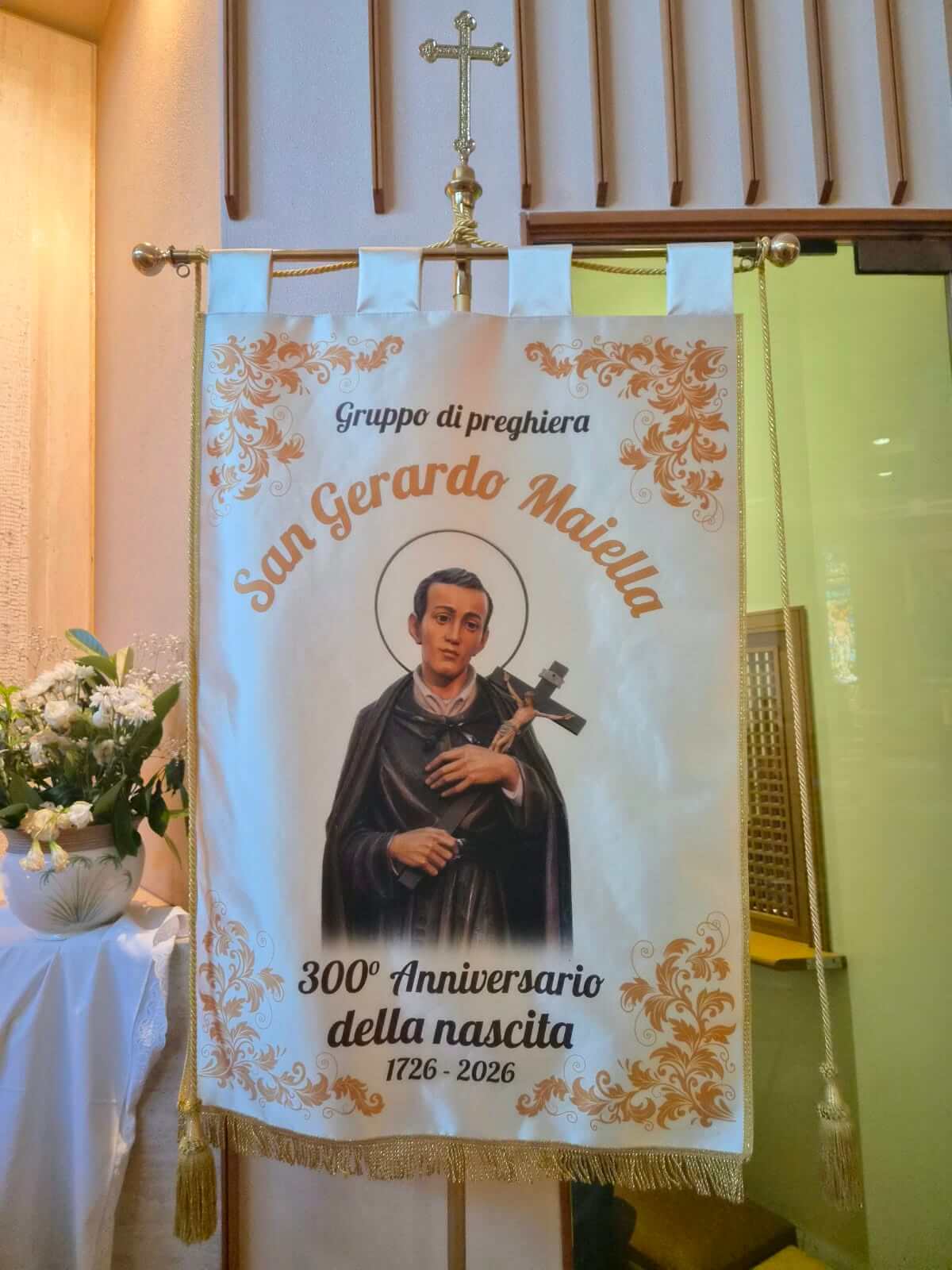
The displays of devotion to Saint Gerard don’t end there. The parish priest, Father Roberto Landi, a native of Salerno and leader of the community for the past seven years, professes a deep devotion to Saint Gerard and has a thorough knowledge of the life of Saint Alphonsus and his Congregation. With great enthusiasm, he spearheaded the creation of a prayer group dedicated to Saint Gerard Majella during the tricentennial year; the group’s banner is on public display. This year and for the next two, the parish will embark on a prolonged period of reflection, celebration, and cultural study surrounding the figure and spirituality of the Saint, who has been an essential part of the neighborhood’s identity for almost fifty years.
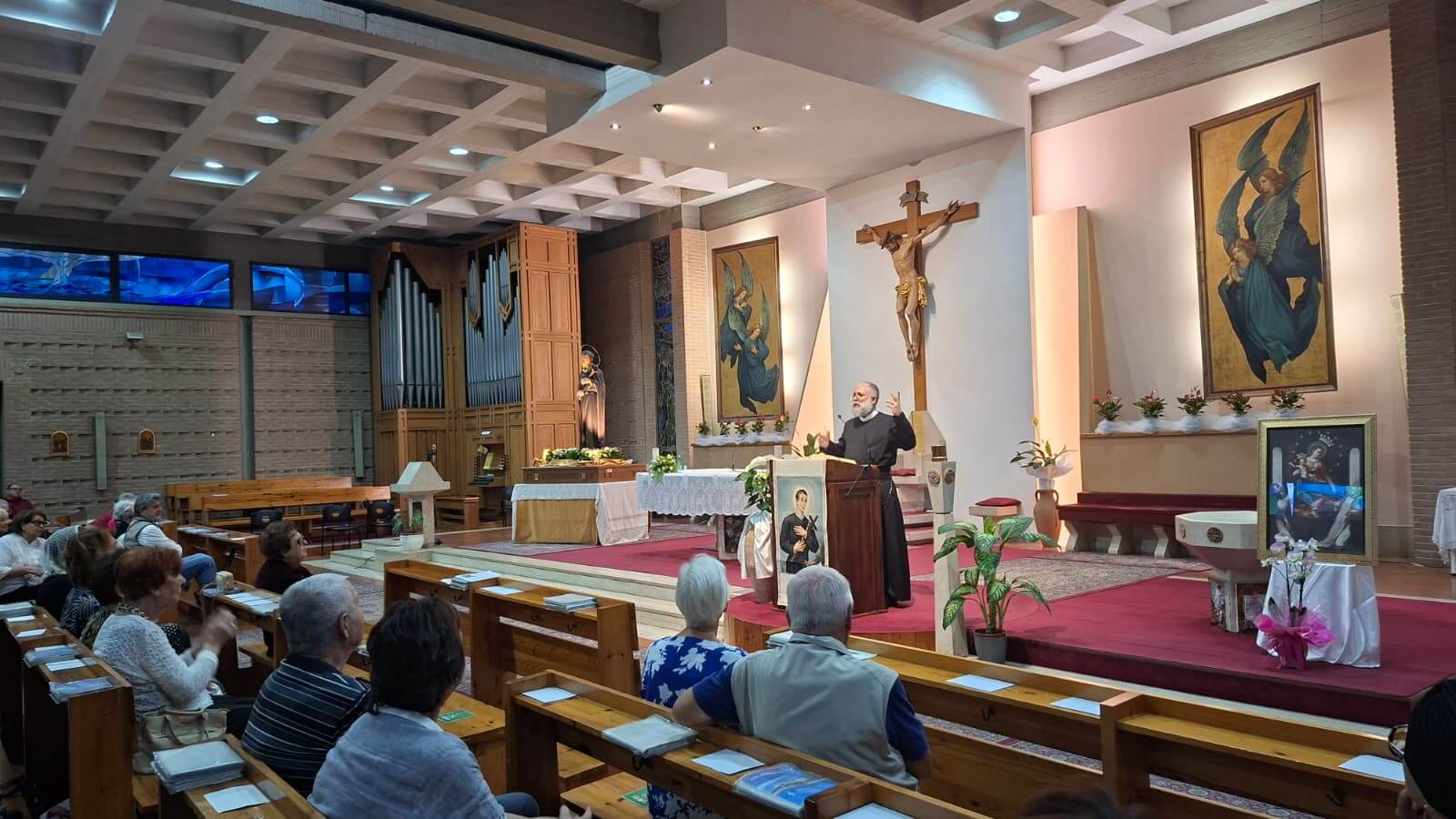
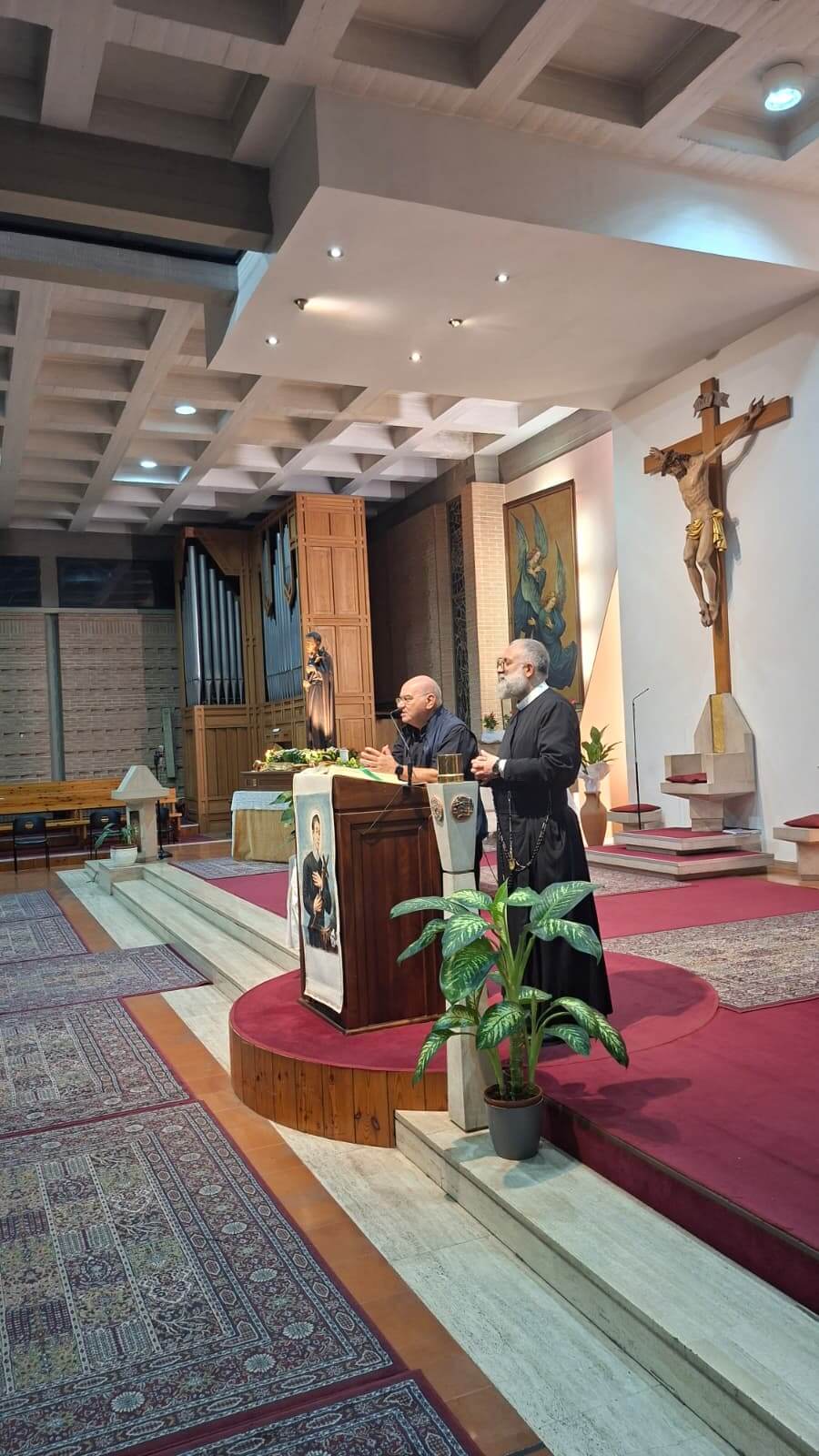
The first event marking the start of the annual patron saint festivities took place on Wednesday, October 7th. Fr. (name) was invited to celebrate the Eucharist. Immediately afterward—and after being introduced by the parish priest—Vincenzo La Mendola gave a talk on the roots of Saint Gerard’s spirituality. He focused his presentation on the family and civic environment of Muro, the religious context of southern Italy in the 18th century, and the models that shaped Saint Gerard’s spiritual life. The community—eager to meet other members of their saint’s religious order (with whom they may have only encountered him on rare occasions or during brief visits) and deeply interested in the presentation—participated in this formative session with great enthusiasm, fully engaging with the content. The “family atmosphere” characteristic of Saint Gerard’s devotees was clearly palpable, as was a strong desire to delve deeper into the spirituality of this great saint. His spirituality is not merely a fascinating hagiographic narrative—though this aspect is essential—but is grounded in a solid spiritual foundation that makes him a source of spiritual renewal, a master of the interior life, and an inspiration for works of charity. It is from this perspective that the spiritual message of the Redemptorist saint was presented.
Brother Patryk Czajkowski, a Polish Redemptorist student currently gaining pastoral experience in the communities of Rome, joined this brief “mission.” He served as an acolyte during the liturgy and immediately captured the attention of the local faithful thanks to his striking physical resemblance to Saint Gerard.
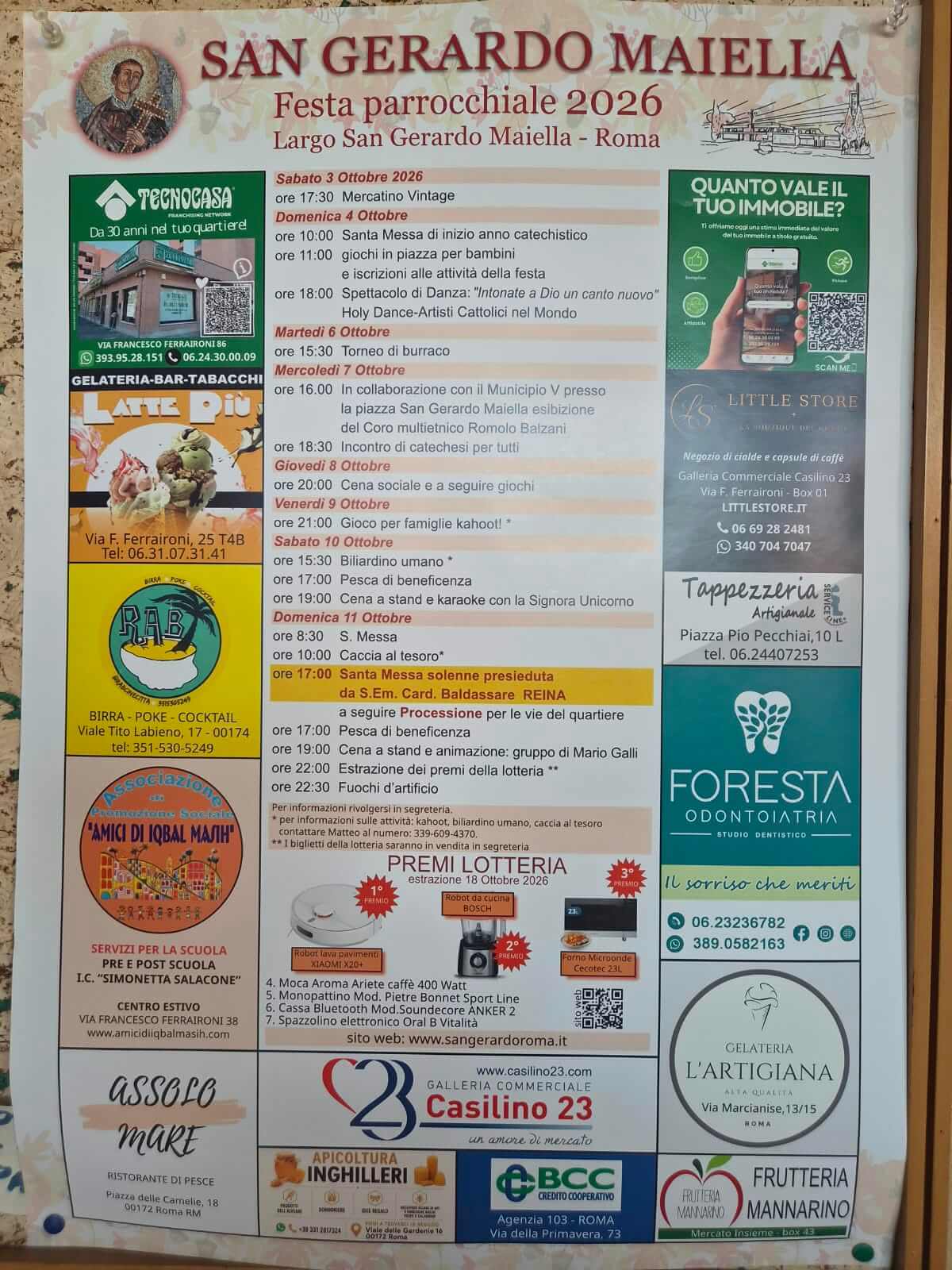
However, the festivities have only just begun. They will continue in the coming days with more events and will culminate on Sunday, October 1st, with a solemn Eucharistic celebration in the square, presided over by Cardinal Baldo Reina—the Vicar of Pope, known for his pastoral dedication to the outskirts of Rome—followed by a procession with the saint’s image through the streets of the neighborhood. Alongside the religious program, a full program of recreational activities has been organized, offering numerous opportunities for community gatherings and entertainment. Furthermore, a unique event is planned for the coming months: the unveiling of a magnificent Bas-Relief marble, a miniature reproduction of the one found on the saint’s tomb in Materdomini (the destination of a recent pilgrimage from this Roman parish). The work will be installed in the designated side chapel, which will also house the image of Saint Gerard. A relic has been embedded in the center of this artistic piece for the veneration of the faithful. Fr. Gennaro Sorrentino, Provincial of the Redemptorists of Europe South, has been invited to preside over the celebration; he is extremely pleased to visit a place dedicated to St. Gerard in Rome and to meet a community that is inspired by this Redemptorist saint to nourish its own faith (the date is yet to be confirmed).
Thus, the tercentenary of his birth unfolds in ways, times, and places that surprise us, often transcending our plans and schedules. Following his own unique path, Saint Gerard continues to advance and prove himself an essential reference point of faith for entire communities, thanks to the extraordinary relevance of his message.
Fr. Vincenzo M. La Mendola, C.Ss.R.
Photos: Fr. Patryk Czajkowski, C.Ss.R.