
An essential anthology for living the Gospel today, reviewed by Father Vincenzo M. La Mendola, C.Ss.R.
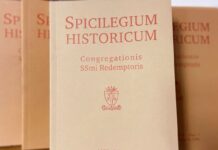
St. Alphonsus Maria De Liguori, My Only King. Alphonsian Writings for Better Living in Time and Eternity, Radio Spada Editions, Fano 2025, pp. 308.
It has been observed that the history of an author is the history of his works; but it is much more accurate to say that, at least in the case of great writers, the history of their works is the history of their fate and their time. Each, in turn, is the man of his time, the typical representative of a generation, the interpreter of a crisis: he is made for his time, and his time for him.

We do not know whether the newly minted Doctor of the Church, Saint John Henry Newman, was referring to any particular author or to himself, but it is certain that his thought is useful and illuminating for grasping the importance that each author—in this case, Saint Alphonsus—had for his time and—we might add—for subsequent eras. The greatness of the saints lies in their being contemporary to every historical era, for the freshness of the Gospel that shines through their writings. If Saint Alphonsus was a shining beacon in the climate of confusion that reigned in his time, he was also—perhaps more incisively—for subsequent centuries, and in a new way, he is also for our time. It is not we who assert this—we could be biased—but it is attested by the continuous, numerous publications of his works and books, essays, and studies of varying breadth, in which his spirituality and theological contribution are continually re-proposed. His enduring relevance is expressed through this uninterrupted publication of his writings, in the most varied and original forms, in an attempt to make them accessible.
This is the case of a new—and recent— anthology of Alphonsian writings, published by Radio Spada and included in the Rosa Mystica series. The 17 chapters present excerpts from the Saint’s works, mostly his pamphlets, on topics relevant to life and spiritual formation.
The original texts, “partially reworked”, are those of intra Text, edited by Fr. Salvatore Brugnano.
A note from Radio Spada Editions (pp.7-8) clarifies that the extended title of the collection My Jesus, you are my only king, my only good, my only love , summarised on the cover as My only King , is taken from the work Considerations and affections on the Passion of Jesus Christ (1761), reported in the volume (pp. 163-206), «and is also the ultimate summary of this collection of writings and of the entire life of the Doctor Zelantissimus» (p. 7).
The collection, “rich and profound, useful and varied,” is representative of Alfonso’s vast output, with particular attention to his apologetic, ascetic, and moral texts. The writings selected and presented in the volume are striking “for the solidity of their arguments and their intellectual scope,” and are also “accessible to all; yet of great nobility,” and—in the editor’s opinion—”provide the ultimate reasons that give enduring validity to what they present.”
The main themes around which the selected pamphlets are connected embrace various aspects of Christian life, of which St. Alphonsus is an expert. The first is prayer. The book offers texts for prayer, such as Devout Affections to Jesus Christ of a Soul That Wishes to Be All His and Devout Aspirations ; others that illustrate and motivate a life of prayer: A Brief Treatise on the Necessity of Prayer, Its Effectiveness, and the Conditions in Which It Should Be Done ; still others that teach how to pray: A Way of Conversing Continuously and Familiarly with God .
The second great thematic nucleus is the love of God, a concept that sums up the essence of Alphonsian theology, traceable in: Sure signs to recognize in us the holy love of God and Arrows of fire, that is, proofs that Jesus Christ has given us of his love in the work of our redemption.
The third is the Eucharist, substantiated in Loving Aspirations to Jesus in the Blessed Sacrament; and in the short work The Mass and the Office Strapped.
A reference to salvation could not be missed, a cornerstone of the Saint’s spirituality and preaching, expressed in recommendations necessary for salvation.
The absolute novelty of the book – in our opinion – is in chapter 12 where a little-known work is presented again: On Christian Hope. It is a pamphlet left unpublished by St. Alphonsus and published for the first time by L. Walter (Alfonso Maria de Ligorio, Dottore della Chiesa, Opera Dogmatica, Rome 1903, II, 727-735). The original, preserved in the General Archive of the Redemptorists, consists of 7 manuscript pages. In St. Alphonsus’s hand are only a few marginal additions and the title Christian Hope; the remainder is in another hand, probably written under dictation or copied from the original which has not survived. St. Alphonsus took up the theme again in the volume History of Heresies (Naples 1772 part II, Conf. XIII, n. 19 et seq.), as Giuseppe Cacciatore notes (Ascetical works, II, Rome 1962, pp. XXXVI-XXXIX). The booklet, though incomplete, contains the Saint’s thoughts on the theme of Hope, central to the current Jubilee. Thanks to the publication of this work, we gain a further perspective on the theme of hope, as seen by Saint Alphonsus.
The book also includes a short Alphonsian page entitled Notices on Fraternal Correction and Scandal, taken from the Confessor directed for the confessions of country people.
To these—considered the cornerstones of St. Alphonsus’s spirituality—the editor adds helpful pages for practicing effective spiritual life and addressing its challenges: “Councils of Relief and Confidence for a Desolate Soul” and “Quiet for Scrupulous Souls“; and practical criteria for living it in an orderly manner, outlined in “Rules of a Christian’s Life in Compendium” and “Rules for Better Living.” The recently republished booklet “Meditations for Eight Days of Private Spiritual Exercises” refers to the classic methodology for living one’s spiritual life.
“The Christianity portrayed in these pages is true, just, and beautiful,” the editor states. “Therefore, coherent, challenging, and fascinating. St. Alphonsus accounts for everything.” And he concludes, with a fitting reference to the value of the collected texts: “The reader will be happily captivated by the meditations, the spiritual ascents, and the great truths that alternate and complement each other in the various sections.”
The book – concludes the editor – ends with two appendices: one concerns Isaiah 53. We wanted to include this chapter on which St. Alphonsus often insists» (pp., 279-285); the other is the part more specifically reserved and dedicated to priests from La Messa e l’Officio Strapazzati (pp. 287-308).
The Note ends with an effective invitation to read, which we make our own: “So take this book and live it fully: you will only draw great benefit from it.”
Fr. Vincenzo M. La Mendola C.Ss.R.