
Long ago on October 26, 1980, Saint John Paul II declared the founder of the Shrine of Pompeii as blessed, has been declared saint on October 19, 2025. Exactly 45 years have passed since the great Polish Pope elevated the humble Advocate of Latiano to the honors of the altars, proclaiming him the man of the Madonna. On 19th October, in a crowded St. Peter’s Square, Pope Leo XIV, in the month of the Rosary, declared its greatest propagator in modern times a saint, defining him in his homily, together with the other six proclaimed saints, as a “benefactor of humanity.”
The ecclesial event involved all of Campania, including Puglia, birthplace of the new saint, and all of Southern Italy, steeped in Marian spirituality, passed down to many generations, right up to the present day, by Mary’s fervent apostle. People pray to and love Our Lady with their hearts and through the words of the supplications, novenas, and prayers written by the great Dominican tertiary, founder of the Pompeian works and renowned writer on Marian piety and spirituality.
This event involved all the members and faithful who support the sanctuary of Pompeii, in every part of the world, but more than anyone it called us, “Neapolitans by identity, language, faith and culture”, to focus our attention on the well-known lay apostle of the Madonna, Neapolitan by adoption.
Among the many initiatives undertaken to prepare for this solemn day, we would like to recall two that took place in the city of Naples, on the day before and on the eve of the canonization ceremony.
The first initiative: Marianella, October 17th
The first gathering took place on Friday, October 17, at 7:00 PM, in the chapel of the Birthplace of Sant’Alfonso in Marianella. The community superior, Father Ciro Avella, included in the program of celebrations in honor of Saint Gerard a formative moment aimed at raising awareness and spiritually preparing the faithful for the canonization of Blessed Longo.
The conference, promoted with a special poster and shared on social media, could not ignore the proclamation of Bartolo Longo’s sainthood, without highlighting his profound connection to the Redemptorist Missionaries and Saint Alphonsus. And there was no place more significant than the Saint’s birthplace, the only Redemptorist outpost still present in the city of Naples.


The Congregation’s young historian, Fr. Vincenzo La Mendola, a well-known figure in Marianella for his various preaching, developed the topic of Redemptorist spirituality in the life and works of Blessed Bartolo Longo. A passionate enthusiast of Redemptorist history and a writer of books, articles, and various reviews, Fr. Vincenzo was introduced by the superior, Fr. Avella, who listed his academic qualifications and recalled his many pastoral and cultural activities. After the introduction, Fr. Ciro handed over the floor to the speaker for the conference itself.
With true passion and great expertise, Fr. La Mendola outlined the spiritual experience of Blessed Longo, focusing specifically on his connection to the Congregation of the Most Holy Redeemer and to Alphonsian spirituality. Highlighting the spiritual journey of the Founder of Pompeii, the speaker recalled his membership in the Dominican Order, having professed in the Third Order, and highlighted his “filiation” to the Redemptorist Congregation, as an “oblate,” recognized with an official diploma by the Rector Major, Fr. Mattia Raus, in 1894. For many, it was a pleasant discovery to know that the newly canonized man lived the teachings of St. Alphonsus throughout his life and was a layman committed to mission, to the abandoned, just like the Redemptorists, and with the popular style of their Founder, with whom he also shares the “apostolate of the pen,” as well as the same way of meditating and praying. Exceptional instruments of this spiritual bond were his three Redemptorist spiritual directors: Fr. Emanuele Ribera, who guided him from 1865 to approximately 1872, together with the Dominican Fr. Alberto Radente, his first confessor; Fr. Giuseppe Maria Leone, spiritual father of Longo and Countess Marianna Farnararo De Fusco, from 1885 to 1902; and Fr. Antonio Maria Losito, his spiritual director from 1902 to 1917. Three figures of “living saints”, among those Longo knew personally – emphasized Fr. La Mendola – and who for the gap of over 50 years, guided him in spirit, nourishing him with Alphonsian asceticism, as attested by many of his studied and annotated books, especially the Neapolitan editions of the ascetic works of St. Alphonsus and Blessed Gennaro Sarnelli. Longo also drew inspiration from the ascetic writings of Fr. Leone, who wanted to publish it in his Pompeian printing house and of which he was an admirer and disseminator.
Many faithful attended the conference with genuine interest, listening to the long and detailed presentation, which did not tire those present in the least, but rather enthused and interested them in a largely unexplored aspect, which allowed them to further discover the greatness of Bartolo Longo and the Redemptorist Congregation within the broader history of the Church in Southern Italy. A representation of the Sisters Disciples of Jesus in the Eucharist also attended the evening, along with some faithful from nearby parishes. We were honored with his presence by the maestro and composer Enzo Avitabile, a frequent visitor to the chapel of St. Alphonsus and a friend of the Fathers.
After the presentation, some of those present took the floor to share their thoughts and ask questions. Among them was the parish priest of Marianella, accompanied by a group of collaborators and faithful from the neighboring parish.
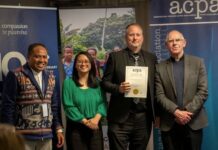
But the speech that truly amazed and delighted everyone was that of Fr. Gennaro Sorrentino, provincial superior of the Southern Europe Province. His presence at the event was an unexpected and welcome surprise for everyone, as it was his first visit, as provincial superior, to the chapel and the community of faithful who frequent it. He was accompanied by Fr. Lorenzo Fortugno, superior of the Pagani community, and Brother Matteo Ergoli, who returned to Marianella to such acclaim and a warm welcome, like one of the family.
Father Gennaro, who was given the floor to conclude the evening, thanked the speaker with evident satisfaction for his interesting and rich historical excursus and emphasized the “prophetic” nature of Longo’s figure and works, which serve as a stimulus and a provocation for lay Christians today. A few days earlier, Father Sorrentino had sent a beautiful circular to all his confreres in the European Province, highlighting the theme developed by Father La Mendola in his lecture.
The Provincial Superior also thanked Fr. Ciro Avella for conceiving and organizing this formation event and invited him to bless those present. At the back of the chapel, on a well-prepared table, the faithful could find informative and devotional materials to deepen their understanding of the conference. Fr. Ciro deserves credit for also allowing us to see the aforementioned servants of God face to face, setting up a large panel with reproductions of their historical photographs and an image of the Blessed.
The second initiative: Calata Capodichino, October 18th
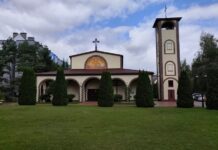
The second event took place on Saturday, October 18, at 7:30 p.m., in the parish church of Our Lady of Lourdes in Calata Capodichino. After the celebration presided over by Father Vincenzo, and concelebrated by Father Ciro and myself, the Redemptorist historian spoke again to present the theme, “The Marian Spirituality of Bartolo Longo.” There could not have been a more appropriate theme for a parish so deeply rooted in Marian culture, and where an altar is dedicated to the Queen of the Most Holy Rosary of Pompeii.


With his well-known passion and expertise, the speaker presented the key tenets of Longo’s Mariology, his personal relationship with the Virgin Mary, his work as a prolific Marian writer, and the sources that enriched his spiritual experience with Mary. There were extensive quotations from Longo’s own writings and numerous biographical references, highlighting the Founder of Pompeii’s relationship with several figures of Christian sainthood and with many religious orders and congregations. Once again, Fr. Vincenzo did not hesitate to recall the influence of the Redemptorists and their Founder on Longo’s Marian spirituality, while also highlighting his Dominican identity, which cannot be ignored, and the contribution of other saintly figures such as St. Louis of Casoria and St. Catherine Volpicelli, central religious figures in 19th-century Naples.
The detailed presentation, which certainly could not be exhaustive but merely presented the topic in general terms, was well received and appreciated by the parishioners and faithful, who, at the conclusion, shared their reflections and requested some clarifications. The parish priest also expressed his personal satisfaction with this formative moment, which he had long been planning and which he brought to fruition with evident emotion. Among the speakers, that of Fr. Luigi Napoleone, a Vincentian missionary, who honored us with his friendly presence, was greatly appreciated.
At the end of the evening, Father Michele thanked his Redemptorist friends for this beautiful sharing and the speaker for what he had conveyed to us and invited everyone to conclude with the Hail Mary prayer. Those in attendance were able to venerate a relic of Longo, displayed for the occasion, along with an image of him and a reproduction of the painting of the Madonna of Pompeii.
With these two initiatives, the city of Naples also expressed its gratitude to the new Saint, remembering his presence and his work on behalf of many of its residents. We hope this small spark, lit by the Redemptorists and the Parish of Our Lady of Lourdes, will be the beginning of further moments of reflection, in which other communities will have the opportunity to study the gigantic figure of the lay saint who transformed a remote valley into what another Neapolitan , Benedetto Croce, called the “Italian Lourdes.”
Don Michele Marra