
Pope Leo XIV meets with the world of culture in Madrid
Many images and headlines accompany Pope Leo’s recent visit to Spain. A carefully crafted program, developed with the collaboration of the pontiff himself, offers a message of hope in key locations of great ecclesial, social, and cultural impact. “Look up!” was the motto chosen for this visit, inviting us to step outside ourselves to build a better, more just, and more beautiful world.
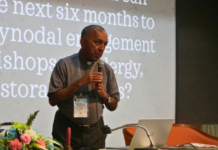
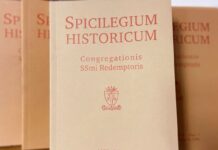
His longest stay was in the city of Madrid, where several events were held, including a prayer vigil with young people, attended by over half a million people; a visit to the Caritas social project “CEDIA 24 Horas,” where he learned firsthand about migration and other situations of social exclusion; the Corpus Christi Mass in the central Plaza de Cibeles with over 1.5 million people; a meeting at the Santiago Bernabéu Stadium with 80,000 people; a meeting with the Congress of Deputies; and the meeting “Networking with the World of Culture, Art, Business, and Sport,” in which we participated as the Perpetuo Socorro Publishing House and the Redemptorist Museum of Madrid, inaugurated on November 8, 2023, and which is currently receiving visits from numerous groups of faithful and experts in sacred art. As the Circular Letter on the Pastoral Function of Ecclesiastical Museums from the Pontifical Commission for the Heritage of the Church, issued in August 2001, emphasizes: “The lesson of history, through the contemplation of art, opens to prophecy, so that ‘the Church, teacher of life, cannot fail to also assume the ministry of helping contemporary man recover religious wonder at the fascination of beauty and wisdom emanating from what history has handed down to us.'” This is, in part, what we are trying to convey through this Redemptorist museum.
Culture as a way of dignifying
It’s commendable that the Pope is concerned and specifically requests this type of encounter during a visit to a country. Why? Because culture goes beyond artistic or aesthetic expressions; it is the way in which human beings establish their relationships with others, with nature, and with God. According to the Social Doctrine of the Church, culture is understood as the “cultivation” of human relationships and the integral development of the person; it therefore requires a constant dialogue between faith and life, promoting fundamental values such as solidarity, the common good, and human dignity in the face of rampant materialism or individualism. Ensuring and defending the cultural dimension of human beings therefore means focusing on their full development, it is a guarantee of equality, and, above all, it means ensuring that the most disadvantaged have access to the means of education and qualifications needed to live with dignity.
In the words of the Pope himself: “And so, she—the Church—cannot ignore culture, because through which man, as man, becomes man, ‘is’ more, access to ‘being’” (cf. Compendium of the Social Doctrine of the Church, 554). “The formation of a culture capable of enriching man requires instead a total commitment of the person, who in it deploys all his creativity, his intelligence, his knowledge of the world and of humanity, and employs, moreover, his capacity for self-control, personal sacrifice, solidarity, and willingness to promote the common good” (CDSI 556).
Upon entering the Movistar Arena, where the meeting with the world of culture took place, Pope Leo XIV received a resounding ovation: art, academia, business, and sport all applauded in a show of respect, appreciation, and welcome. It would be difficult to find another international figure who has received the recognition the Pope has received in recent days. Faced with a political class discredited by polarization, corruption, disrespect for human rights, and, above all, war, the Pope stands out as an unquestionable moral and ethical authority in our time, regardless of one’s religious beliefs.
The goal: to weave networks
The primary goal of the meeting was to recognize and highlight the work of institutions and individuals who build a more humane, just, and fraternal society, as well as to invite participants to be “new threads” capable of weaving networks that harmonize all areas of social life. The human search for meaning in the 21st century was one of the reasons for the meeting; the Church, as a meeting place open to all, continues to be a place where we can raise our gaze and gaze into the horizon, and serve and praise God in humanity.
Antonio Banderas emphasized the importance of dialogue between the Church and civil society. The Church is humanity’s greatest producer of art, a creative, imaginative institution that has brought Jesus Christ to life in countless cultural and anthropological representations. Art cannot be merely beauty, but also questioning, intuition, reflection, contrast, revolution; it is and must continue to be a denunciation of empty beliefs, a voice of alarm for societies growing accustomed to injustice, an alternative to violence, to all forms of violence. We are obliged to look and see the complexity of the human soul and its great questions; we need to continue creating beauty and truth that lead to spiritual experience, the Malagasy actor stated.


Human and technological challenges
Regarding human and technological challenges, a transversal reference was made to Pope Leo XIV’s first encyclical, Magnifica Humanitas. The vice-rector of the Complutense University of Madrid, José María Coello de Portugal, spoke of the social function of academia and education as an element of social justice and a renewed human right that makes citizens free, educated, and engaged in society. He expressed gratitude for the proclamation of an academic and university professor, John Henry Newman, as a Doctor of the Church, and highly appreciated the impact of his dialogue with the society of his time. He then raised several challenges: how can we build pluralistic coexistence in the classroom? How can science be used to guide the social and technological changes the Pope speaks of in Magnifica Humanitas?
Then came the speeches of business and worker representatives (the two largest unions and the representative of small businesses), who emphasized the need to create a social contract that defends the dignity of work and workers. After a flamenco performance and remarks by two prominent athletes, Pope Leo addressed the audience and said: “Faith is love, and therefore it creates poetry and music. Faith is joy, and therefore it creates beauty.” “It is not strange that the proclamation of the Good News and the awareness of being brothers and sisters are expressed in the form of lightning, of mystical poetry… all of this demonstrates the connection between the material and the spiritual that constitutes our existence.”
Networking means serving selflessly; men and women moved by faith have built hospitals and schools, solidarity initiatives that give dignity to people. Therefore, we must ask ourselves—the Pope emphasized—whether Europe would have forged its identity without the spiritual imprint that has permeated its history? We must rethink the eternity that bursts into everyday life, across space and time, through the incarnation of Jesus Christ; we must rethink the reconciliation between the everyday and the spiritual.
Finally, he invited us “to be new threads to weave new networks that harmonize all areas of life, to weave a renewed society in which time is imbued with eternity, culture preserves memory and fosters dialogue, education promotes the search for truth with a critical spirit, art inspires wonder and generates noble emotions, business recognizes the dignity of the person, and work continues to be a driving force of hope.”
Missionaries who embrace cultural diversity
After listening attentively to Pope Leo, we can only reaffirm, as Redemptorist missionaries, that culture—far from being an obstacle to evangelization—is an indispensable and privileged vehicle for it. This involves understanding and recognizing local cultures, respecting one another at all times, making the Gospel message understandable, accessible, and of high quality in all its forms, and demonstrating an embodied evangelization that restores dignity to every human being, speaking their own language: that of respect, acceptance, and communion. Fostering artistic experience, as St. Alphonsus did, through music, painting, architecture, theology, and art in general, already means valuing the traditions and customs of others; it means stepping out of our own small worlds, as Antonio Banderas said, to discover the presence of God in the vastness of the universe and in every atom. Our charism is called to embrace cultural diversity and to value the good, the beautiful, and the true that exists in each of these cultures; it is not a question of winners and losers, nor of evangelizers and evangelized, but of a communal brotherhood in which each person contributes according to the charism received.
Finally, evangelizing requires an ethical commitment to reality, raising one’s gaze and denouncing the cultural and social structures that exclude, limit, or strip people of their dignity.
We hope that Pope Leo’s testimony will inspire in us that slow but firm conviction that a diplomacy of peace, encounter, and brotherhood can be built on faith.
Fr. Francisco Caballero, CSsR.